Showing posts with label RIMC. Show all posts

Wednesday, May 30, 2007

Cuckoos and their calls

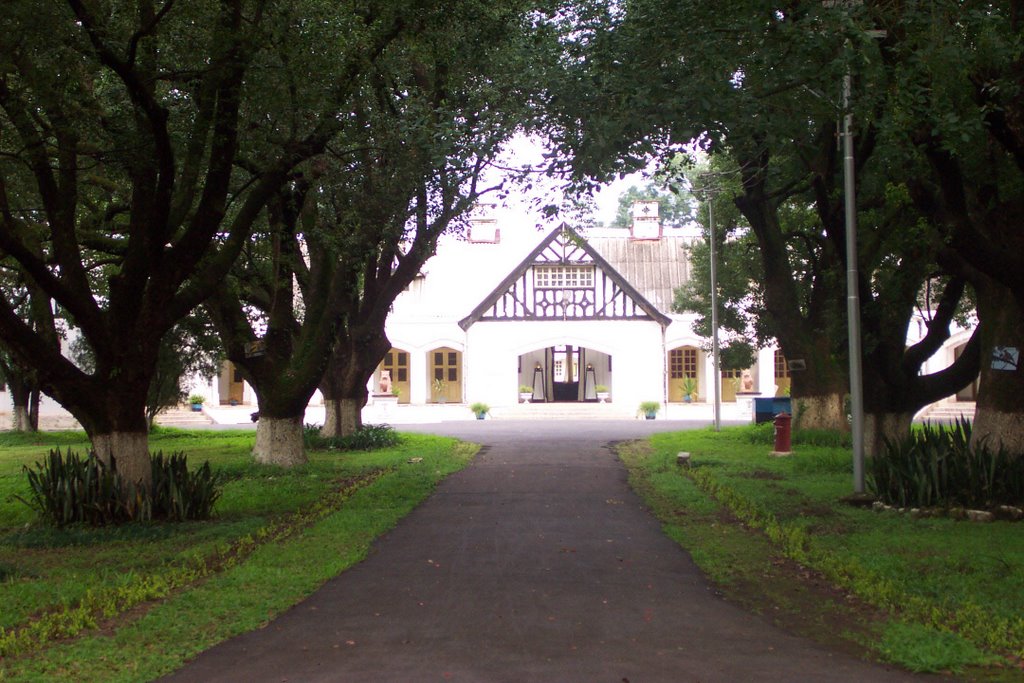
I first came under the spell of cuckoo calls 35 years ago, when I was at school in the RIMC in Dehradun. With the onset of late spring-early summer, the loud, piercing calls of a variety of cuckoos resonated through the verdant school campus. Three distinct calls were imprinted in my memory, and especially one of them, my favourite, which had a hypnotic effect on me.

Through my five years in RIMC, April-May was indelibly associated in my memory with these bird calls. But I never spotted the birds.

I knew nothing about birds then (or now). I assumed the “coo-ooh” must be a cuckoo’s call, though I had never seen one. It was only a few years ago that I managed to spot a cuckoo calling, perched high and hidden on a tree. I later learnt that this was the Asian Koel. (Koel, or koyal or kukil are among the Indian names for the bird.)

Here is a picture of the Asian Koel.


Its call can be heard here.

Many years after passing out from the school, I began revisiting RIMC. And each time I partook of the bird calls. I tried my best to spot the particular bird whose call enthralled me, but it was always too high up on a tall tree, and never visible.

Last week I was at the RIMC again, to attend the centenary celebrations of Hugh Catchpole, a former Master and Principal of the school. (Pictures from the Catchpole centenary celebrations are accessible here.) Almost immediately after I reached the school, I heard my favourite bird call. And following the sound, my son Rishiraj and I spotted the bird, in silhouette, perched at the very top of a tree. So now I had a clue and could try to find out what bird it was.

And thus did I come to know that this was the Indian Cuckoo.

Here is a picture.


Its call can be heard here.

The bird is known locally in Uttarakhand as "Ka Phal Pa-kyo", based on its four-syllable note, which announces that the wild Ka fruit (a fig) is ripe. The same bird is known as “Bau-Kotha-Kou Pakhi” in Bangladesh and West Bengal. (The Bengali song "Ei udaashi haowaay pothey pothey mukulguli jhorey" by Rabindranath Tagore, refers to the cukoo's call by this name. See song no. 223 here.) Again, based on its call, which is here interpreted as the anguished cry of a bereaved husband, asking his still wife to say something.

And I learnt about the Common Hawk Cuckoo, also known as the Brainfever bird (for its call).

Here is a picture.


Its call can be heard here.

So it was a culmination of sorts for me, at the very site of the beginning.

Meanwhile, I had of course started this blog, with its title inspired by the Buddhist tale, The Prince who became a Cuckoo. That was a spur-of-the-moment decision. But it is most apt. I can’t have enough of cuckoos’ calls, and especially that of the Indian Cuckoo.

Friday, March 16, 2007

Rimcollians, Dehradun 2007


I am a Rimcollian, which is the name for an Old Boy of the Rashtriya Indian Military College (formerly the Prince of Wales Royal Indian Military College), in Dehradun in the Himalayan foothills. Earlier this week I was in Dehradun to attend the school reunion, which is held on the Foundation Day, 13 March.

The Rimcollian bond is very strong. In the 85 years since the school was established, less than 5,000 students have studied here. So its a very small and exclusive fraternity. The unique and demanding military ethos of the school also bonds all the Old Boys. Rimcollians have been at the forefront of military valour and leadership of the Indian army and armed forces for 7 decades. Many Rimcollians also led the armed forces of Pakistan after 1947.

This year marks the centenary of Mr Hugh Catchpole, an Englishman, who came to teach at the RIMC in 1928. He became the Principal of the school in 1948, and in 1953 went to Pakistan where he established and taught in 3 schools - until his death in 1997. The RIMC and the 3 schools in Pakistan, and the Old Boys of all these schools, are jointly observing and celebrating the Catchpole Centenary with a diverse programme of events spread across the schools in India and Pakistan.

I studied at the RIMC during 1972-76. And during 1998-2003 I did a second stint in the school, this time as a visiting Master. RIMC is one place that I shall always feel is my home. I can never have enough of the verdant splendour of the campus and the exceptional sensibility of the cadets fashioned by the daily routine and culture of the school.

Amrit, in the picture above, joined RIMC in 2003. I was seeing him after 4 years. As I told him, he was a complete mess then; he's a fine young man now!

Pictures from the RIMC reunion of 2007 are accessible here.

The Last Post


An important event during the Rimcollians' reunion at the RIMC in Dehradun is the wreath-laying ceremony at the War Memorial in the school. This honours all the Old Boys who made the supreme sacrifice, of their lives, during battle. The list of names on the War Memorial begins from the Second World War, and continues to the present (in anti-insurgency operations).

The wreath-laying by a senior Old Boy, to the playing of the Last Post by buglers is a sombre and unfailingly moving experience for all the Old Boys present. Being back in school during the reunion, everyone is joyously transported to their childhood. But the War Memorial ceremony, and the Last Post, remind us that some others with similar happy children's laughter were suddenly snatched away, by the very heroism inculcated by the school. There is pin-drop silence, its as if even the leaves on the trees are still.

The 'Last Post' bugle call is used at military funerals, memorials and times of Remembrance. It symbolises the 'end of the soldier's day' in so far as the dead soldier has finished his duty and can rest in peace.

Hear / download the Last Post here.

Saturday, January 27, 2007

Off to Dubai


I am travelling again, leaving tomorrow for Dubai where our company is exhibiting at the Arab Health trade fair.

I had been to Arab Health as a visitor last year.

My visit to Dubai last year occasioned a get-together of Rimcollians (alumni of the Rashtriya Indian Military College, Dehradun) based there. There will be a get-together again this time. I also hope to meet Dr Saif Alghais who teaches in the biology department of the UAE University; we were colleagues at the Salzburg Seminar in 1992.

I had been struck by Dubai's uniqueness, as a city that's a market. But I had also been disturbed seeing the large number of Southasian workers, who slept in shift-beds and spent holidays standing in the neighbourhood street junctions and gazing blankly into space as they had nowhere else to go. They work hard and save money in every way so as to have a better standard of living for themselves and their families back home. There are also many educated and professionally qualified Indians living comfortably in Dubai. But I had wondered whether I would have wanted to live in a place where life is defined singularly around personal material pursuits and consumption, and devoid of a relation to the place and the people, of self-expression and human intercourse, with the society, the culture, the public sphere, the civil society... politics.

Wednesday, October 04, 2006

St Francis of Assisi


Today, 4th October, is the Feast Day (i.e. death anniversary) of St Francis of Assisi, one of the most loving and beloved figures associated with the Roman Catholic faith.

St. Francis was born at Assisi in Italy in 1182. After a carefree youth, he turned his back on inherited wealth and committed himself to God. He lived a very simple life of poverty – he married Poverty. He gained a reputation of being a friend of birds and animals. He established the rule of St Francis, which exists today as the Order of St. Francis, or the Franciscans. He died in 1226, aged 44. St Francis of Assisi is the patron saint of the environmental movement.

I first learnt about St Francis through coming across the Prayer associated with his name.

Here's a clip from the film Brother Sun, Sister Moon (1972), directed by Franco Zeffirelli, showing the Prayer.


Lord, make me an instrument of your peace,
Where there is hatred, let me sow love;
where there is injury, pardon;
where there is doubt, faith;
where there is despair, hope;
where there is darkness, light;
where there is sadness, joy;

O Divine Master, grant that I may not so much seek to be consoled as to console;
to be understood as to understand;
to be loved as to love.

For it is in giving that we receive;
it is in pardoning that we are pardoned;
and it is in dying that we are born to eternal life.


Some years later I found The Little Flowers of Saint Francis, a collection of beloved stories about St. Francis and the early days of his Order.

But it was only after reading Nikos Kazantzakis’ brilliant, empathic fictionalised biography of St Francis of Assisi, God’s Pauper (published in 1950), that I felt a close and fond bond with him. A reviewer in Amazon.com writes about God’s Pauper:


"Reading Kazantzakis' St. Francis is a consistently joyful, frequently ecstatic experience. A fictionalized account of the life of St. Francis, this novel allows the reader to know the saint almost personally. Told through the eyes of his loyal companion, the story not only chronicles the historic events in the life of St. Francis, but also captures the tumultuous essence of a life lived in longing for ever more service to God. This is one of the best books about St. Francis in existence. "


I was also fortunate to find in the RIMC Library in Dehradun – serendipity - In the Steps of St Francis by Ernest Raymond, another wonderful introduction (published in 1938) to this remarkable and lovable figure, in which the author sketches St Francis’ personality while visiting several places associated with him.

Also in the RIMC Library was the magnificent collector’s item, St. Francis of Assisi: 1226-1926: Essays in Commemoration, edited by Walter Seton, which was published by the University of London in 1926. (This book was given to the library by a master in the school, an Englishman, who had received it shortly after it was published, as a gift from someone in his family!)

Friday, September 22, 2006

Back home

I returned to Calcutta last night, after a hectic 4 day trip to south India, occasioned by some work there, but principally rushing around, travelling through the soils of my ancestral roots and meeting long-lost friends.

When one is in a ingrained schedule of living, which includes blogging - then, an enforced break from blogging and travel to far-flung places serves to remind that blogging is such a tiny part of life and the world, which must remain largely incommunicable!

I flew from Calcutta to Madras, then took an overnight train to Palakkad. I then took a bus from Palakkad to Cochin, via Trissur, reaching in the evening. I spent the night with my school friend Madhu. The next morning I took a bus back to Palakkad. And immediately took a bus to Coimbatore, from where I took a bus to Kothgiri, in the Nilgiri mountains. I spent the night with my friend Pratim. The next morning, I boarded a bus back to Coimbatore, and then another one to Palakkad. I took an overnight train to Madras, and yesterday I visited my college friend JP's mother in Madras, and another school friend Balaji, before taking the flight back to Calcutta in the evening.

I saw the reflection of the rising sun on the Arabian Sea on India's west coast, and also the reflection of the setting sun on the Bay of Bengal on India's east coast. And I travelled through dry plains, gigantic river basins, lush green countryside, wooded hills and thickly forested mountains.

I could write a fat novel on the resonances and significance of the places I travelled through and the people I met, occasioned by this chance trip!

Returning to a very wet and flooded Calcutta, where there's been incessant rain for 3 days.

Monday, July 17, 2006

Borders?

Shukla-saab’s mail reminded of a quote from Thor Heyerdahl, the celebrated Norwegian voyager. This was on a poster, of the icon on the sail of the Kon Tiki craft, that I bought at the Kon Tiki Museum in Oslo. Heyerdahl (who had traversed vast parts of the earth's surface) said:

“Borders? I have never seen one but I have heard they exist in the minds of most people."

(I just google-searched to get the exact quote and I found it in this blog!)

I got this Kon Tiki poster mounted and gave it for display in the RIMC library in Dehradun. The boys there are trained to become officers in the Indian armed forces, to protect the country’s borders. I thought it was important that they also imbibe a wider perspective during their schooling.

Upside down, downside up

I also subsequently gave to the RIMC library another poster, this was a map of Southasia brought out by the magazine Himal (published from Kathmandu).
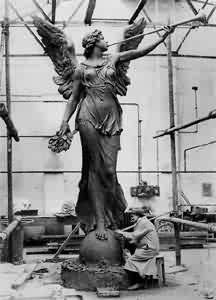
This map was shown with south on the top, and north on the bottom.

On one of my RIMC visits, a boy turned the map upside down, to correspond to what he knew and perceived as correct. So I had the opportunity to put it south side up again, and tell him that this was how it should be in this case, that we should think about the relative-ness of all that we know and accept uncritically, that things could appear very different from another frame of reference, and that the purpose of this different map in the school library was to remind him of this.

Sunday, July 02, 2006

Literate

In an earlier post I remembered my friend James Aboud, in Port of Spain, and wondered whether there were very many judges with his taste, erudition and sensibility.

In a similar vein, I wonder whether there are very many employers as literate as Mr Ram Ray of Calcutta. He runs the advertising company Response India. I worked for him in 2000, on the CALMANAC project of the Calcutta Municipal Corporation. Calmanac.org was the official website of Calcutta. We managed to put out a reasonably good website on the date of the launch (24 August 2000, the day observed as Calcutta’s “foundation” day). And further work was done thereafter. The portal got very good responses from surfers. Sadly, for reasons unknown to me, Calmanac.org does not exist anymore. And thus a lot of information and content that we had worked very hard to collect and put up – is not accessible.

Mr Ray once asked me about haiku. I gave him my copy of Basho’s Narrow Road to a Far Province. He still has that, and I’m sure, to good effect!

On another occasion, Mr Ray requested me to give him a write-up about … moral conduct catechisms, the kind associated with particular numbers, like “the three such and such” or the “four so and so” and so on. So I quickly concentrated my thoughts and wrote out a short note. I sent it to him saying: “Herewith some thoughts triggered by your reference. Hope it's useful.”

He replied: “Many thanks for your prompt response. After abstruse simplification of the profound proselytizations and mystic mores, your input will be indeed useful.” He titled it “Mnemonics of Conscience”.

I wish my beloved English master in school, Mr GM Khan, were alive to read this and critically assess it towards instilling sound composition skills.

Thursday, June 29, 2006

Dandi March

Last year I had obtained a print of the photo of Mahatma Gandhi picking up salt at Dandi. This was presented to my alma mater, the Rashtriya Indian Military College, Dehradun, to commemorate the 75th anniversary of the Dandi March. The great Salt March is an event that shook the British Empire.

Gandhi's articles, notes, letters and speeches from the period of the Dandi March (12 March - 6 April 1930) are to be found in Vols. 48 and 49 of The Collected Works of Mahatma Gandhi.

Wednesday, June 28, 2006

RIMC

The RIMC is also a very different kind of school, it is a unit of the Indian Army, to train boys (13-18) to become officers in the armed forces. Established in 1922, RIMC has nurtured the cream of the Indian armed forces. I was fortunate to go there (1972-76).

In the context of my challenging work on a slum improvement project in Calcutta in 1997, the year of the 75th anniversay of RIMC, and also the 50th anniversary of India's independence, I awakened to the soldierly qualities and capabilities I had imbibed from the school. During 1998-2003, I visted RIMC regularly every few months, on teaching visits. I developed a close association and attachment with the cadets, being with them through their daily routine, in classroom, sports field, music room, dormitory etc, and tried to motivate them to conscience, excellence and leadership, being a confidante, counsellor. All this was of course made possible by Col Mamgain, who gave me the freedom to do what I felt impelled to do. The school library is also a fabulous resource. Each visit of mine is also associated with the books I found and read, perhaps impossible to find anywhere today. Its not possible to describe what my visits to RIMC meant to me, and how precious and gem-like each of those days was! And of course the beautiful verdant, wooded campus, full of fragrances and bird-song.

Col Mamgain's friendship was also a gift, how I treasure the memory of our long, long conversation-walks, talking mostly about the school, the problems, the possibilities, as well as mutual sharing, through moments of inspiration as well as dejection. My wife and/or son/s had also accompanied me on some of my trips. My friend Achinto, photographer, accompanied me on a couple of visits. I was keen that my sons join the school, but that was not to be.

Owing to my awakening to the demands of the responsibility of managing the manufacturing enterprise (started by my father in 1967) which I had taken up on behalf of my family, I was unable to continue my RIMC visits. There was also the emotional toll. Col Mamgain retired in Oct 04, and the batch of students with whom I had become particularly close graduated.

Anyway, after an assignment in Dubai, Arun Mamgain is now back in Dehradun, where he has settled after retirement. The RIMC Commandant now is Col Prem Prakash, whom I also know well, he was my junior in school, and was the admin officer of RIMC during my early visits. I think I have also become more resilient aginst emotional toll of rich past! So I look forward to being back at RIMC soon.

Remembering RIMC


For more RIMC pictures, see here.

An essay on the cow

Among the books in the RIMC library was Plain Words: A Guide to the Use of English, by Sir Ernest Gowers, published by His Majesty's Stationery Office (HMSO), London, in 1948. (This book reached the RIMC Library soon after its publication.) The book (together with other sequel volumes) was written at the invitation of the (UK) Treasury. It is concerned particularly with the use of English by officials.

The book has an essay on the cow, written by a small boy. I reproduce that below for everyone's edification. The author writes:

"Why do so many writers prefer pudder to simplicity? It seems to be a morbid condition contracted in early manhood. Children show no signs of it. Here, for example, is the response of a child of ten to an invitation to write an essay on a bird and a beast. … The writer had something to say and said it as clearly as he could and so has unconsciously achieved style.”

The Essay

The bird that I am going to write about is the Owl. The Owl cannot see at all by day and at night is as blind as a bat.

I do not know much about the Owl, so I will go on to the beast which I am going to choose. It is the Cow. The Cow is a mammal. It has six sides – right, left, an upper and below. At the back it has a tail on which hangs a brush. With this it sends the flies away so that they do not fall into the milk. The head is for the purpose of growing horns and so that the mouth can be somewhere. The horns are to butt with, and the mouth is to moo with. Under the cow hangs the milk. It is arranged for milking. When people milk, the milk comes and there is never an end to the supply. How the cow does it I have not yet realised, but it makes more and more. The cow has a fine sense of smell; one can smell it far away. This is the reason for the fresh air in the country.

The man cow is called an ox. It is not a mammal. The cow does not eat much, but what it eats it eats twice, so that it gets enough. When it is hungry it moos, and when it says nothing it is because its inside is all full up with grass.