Showing posts with label birds. Show all posts

Saturday, June 30, 2007

Sermon to the Birds


Sirocchie mie uccelli, voi siete molto tenute a Dio vostro creatore, e sempre e in ogni luogo il dovete laudare, imperò che v'ha dato la libertà di volare in ogni luogo; anche v'ha dato il vestimento duplicato e triplicato; appresso, perché elli riserbò il seme di voi in nell'arca di Noè, acciò che la spezie vostra non venisse meno nel mondo; ancora gli siete tenute per lo elemento dell'aria che egli ha deputato a voi. Oltre a questo, voi non seminate e non mietete, e Iddio vi pasce e davvi li fiumi e le fonti per vostro bere, e davvi li monti e le valli per vostro refugio, e gli alberi alti per fare li vostri nidi. E con ciò sia cosa che voi non sappiate filare né cucire, Iddio vi veste, voi e' vostri figliuoli. Onde molto v'ama il vostro Creatore, poi ch'egli vi dà tanti benefici, e però guardatevi, sirocchie mie, del peccato della ingratitudine, e sempre vi studiate di lodare Iddio.

This is St Francis of Assisi's "Sermon to the Birds", in Italian. The sermon is reported in Chapter 16, of Part I of The Little Flowers of St Francis of Assisi.

My little sisters, the birds, much bounden are ye unto God, your Creator, and always in every place ought ye to praise Him, for that He hath given you liberty to fly about everywhere, and hath also given you double and triple raiment; moreover He preserved your seed in the ark of Noah, that your race might not perish out of the world; still more are ye beholden to Him for the element of the air which He hath appointed for you; beyond all this, ye sow not, neither do you reap; and God feedeth you, and giveth you the streams and fountains for your drink; the mountains and valleys for your refuge and the high trees whereon to make your nests; and because ye know not how to spin or sow, God clotheth you, you and your children; wherefore your Creator loveth you much, seeing that He hath bestowed on you so many benefits; and therefore, my little sisters, beware of the sin of ingratitude, and study always to give praises unto God.

Painting: Pala Bardi, by Maestro del San Francesco, from Santa Croce, Florence. Courtesy Silvia Paoletti.

Wednesday, May 30, 2007

Cuckoos and their calls

I first came under the spell of cuckoo calls 35 years ago, when I was at school in the RIMC in Dehradun. With the onset of late spring-early summer, the loud, piercing calls of a variety of cuckoos resonated through the verdant school campus. Three distinct calls were imprinted in my memory, and especially one of them, my favourite, which had a hypnotic effect on me.

Through my five years in RIMC, April-May was indelibly associated in my memory with these bird calls. But I never spotted the birds.

I knew nothing about birds then (or now). I assumed the “coo-ooh” must be a cuckoo’s call, though I had never seen one. It was only a few years ago that I managed to spot a cuckoo calling, perched high and hidden on a tree. I later learnt that this was the Asian Koel. (Koel, or koyal or kukil are among the Indian names for the bird.)

Here is a picture of the Asian Koel.


Its call can be heard here.

Many years after passing out from the school, I began revisiting RIMC. And each time I partook of the bird calls. I tried my best to spot the particular bird whose call enthralled me, but it was always too high up on a tall tree, and never visible.

Last week I was at the RIMC again, to attend the centenary celebrations of Hugh Catchpole, a former Master and Principal of the school. (Pictures from the Catchpole centenary celebrations are accessible here.) Almost immediately after I reached the school, I heard my favourite bird call. And following the sound, my son Rishiraj and I spotted the bird, in silhouette, perched at the very top of a tree. So now I had a clue and could try to find out what bird it was.

And thus did I come to know that this was the Indian Cuckoo.

Here is a picture.


Its call can be heard here.

The bird is known locally in Uttarakhand as "Ka Phal Pa-kyo", based on its four-syllable note, which announces that the wild Ka fruit (a fig) is ripe. The same bird is known as “Bau-Kotha-Kou Pakhi” in Bangladesh and West Bengal. (The Bengali song "Ei udaashi haowaay pothey pothey mukulguli jhorey" by Rabindranath Tagore, refers to the cukoo's call by this name. See song no. 223 here.) Again, based on its call, which is here interpreted as the anguished cry of a bereaved husband, asking his still wife to say something.

And I learnt about the Common Hawk Cuckoo, also known as the Brainfever bird (for its call).

Here is a picture.


Its call can be heard here.

So it was a culmination of sorts for me, at the very site of the beginning.

Meanwhile, I had of course started this blog, with its title inspired by the Buddhist tale, The Prince who became a Cuckoo. That was a spur-of-the-moment decision. But it is most apt. I can’t have enough of cuckoos’ calls, and especially that of the Indian Cuckoo.

Sunday, April 08, 2007

Birdsong


I surprised myself this evening by learning and setting to melody the Sanskrit verses I referred to in my last two posts. My sons Rituraj and Rishiraj had, once again, to suffer my efforts at memorisation all morning.

Two Birds, and Song of Truth could be appropriate titles for these!

I have been invited to a conference in Beit Jalla (near Bethlehem) in August. Given the number of close friends I have in Israel and Palestine and the various things I could and would like to do there, I'm planning to go. That should give me an opportunity to visit my friend Jean Claude, bassist and musician, in Jerusalem. In 2003, we shared a rich and fruitful musical collaboration. I also sang with Palestinian musician friends. So I am looking forward to singing these songs there.

Meanwhile, thanks to the wonders of the internet, I now have the Audacity software and am able to do some rudimentary recording, which is immensely helpful.

Saturday, April 07, 2007

Source of Satyameva Jayate


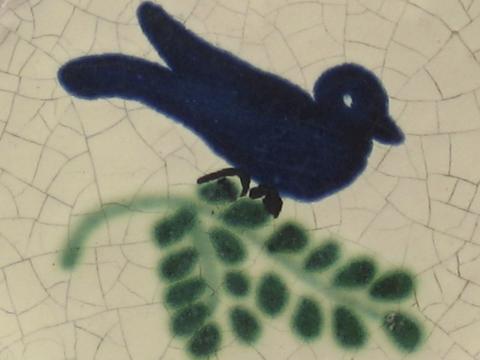
Yesterday afternoon, I was standing on the street kerb in front of my house, enjoying a smoke, and looking at the tile with the bird image on the gate post (the same as the one on this blog’s mast-head). On the telephone cable passing along the house were two sparrows. From high above on the blooming radha-chura tree in front of the house came the ceaseless tuk-tuk-tuk of the coppersmith. And from a few houses away came the entrancing call of the caged cuckoo.

Looking at the two sparrows, I recalled the verse “two birds sitting on a tree …” I vaguely knew this was from the Upanishads. I went back indoors, and later went to the internet to find the exact verse. I found this very soon, in English translation; it was from the Mundaka Upanishad, and was also repeated in the Svetasvatara Upanishad.

I wanted to get the original Sanskrit verses, I thought I might try to set this to melody. I found that too soon enough. But as I was rapidly scanning the Sanskrit verses of the Mundaka, I came upon “satyameva jayate…” (3.1.6). Extraordinary! This was a great chance discovery!

Quite some time back, I had written a post on Satyameva jayate, the Indian national credo, which means “truth alone is victorious”. Hence searches on satyameva jayate showed up my post, as my sitemeter’s analyses showed me. But there had been several searches from time to time on where this phrase was originally from, which edict it appeared on. I was not aware of the origins of the Indian national credo. I presumed it was simply a phrase in Sanskrit, with the meaning expressing the goal set for the new republic.

But as I now discovered, thanks to the two sparrows on the wire, the national credo was from the Mundaka Upanishad. A concluding verse of this Upanishad declares that its aim is to make man attain Self-Knowledge. “Munda” means head; hence the name indicates that this Upanishad is the Head of all Upanishads.

सत्यमेव जयते नानृतं
सत्येन पन्था विततो देवयानः
येनाऽऽक्रमन्त्यृषयो ह्याप्तकामा
यत्र तत् सत्यस्य परमं निधानम्

satyameva jayate naanritam
satyena pantha vitato devayanah
yenaa kramantyarishayo hyaaptakaamaa
yatra tat satyasya paramam nidhaanam


Meaning:

Only truth prevails, not untruth; by the path of truth is laid out, the Divine way, on which the sages of yore, fulfilled in their desires, attain the supreme treasure of Truth.

A precious education in citizenship for this child of India.

Friday, April 06, 2007

Two birds sitting on a tree


द्वा सुपर्णा सयुजा सखाया समानं वृक्षं परिषस्वजाते
तयोरन्यः पिप्पलं स्वाद्वत्त्यनश्नन्नन्यो अभिचाकशीति

समाने वृक्षे पुरुषो निमग्नोऽनिशया शोचति मुह्यमानः
जुष्टं यदा पश्यत्यन्यमीशमस्य महिमानमिति वीतशोकः

Two birds, inseparable friends, cling to the same tree. One of them eats the sweet fruit, the other looks on without eating.

On the same tree man sits grieving, immersed, bewildered, by his own impotence. But when he sees the other lord contented and knows his glory, then his grief passes away.


Mundaka Upanishad, Svetasvatara Upanishad

Thursday, October 19, 2006

Cuckoo's call!

I was searching on the net yesterday evening - for bird songs.

I found there are quite a few resources on this, and was I delighted!

Check this out.

And this.

And this.

What an awesome work of devotion, to record bird songs, and then make this available to people across the world, free, through the internet.

Life is beautiful!

So I am able to attach a sound clip of the cuckoo (Asian koel) here. Do hear this dear friends!

Wednesday, September 06, 2006

Birds of Calcutta


I was thrilled to discover the website "Birds of Kolkata" a few days ago. Wow! What a delightful resource, and what a magnificent public service!

So I'm using an image from this website of the Asian Koel, a common Indian cuckoo (with the permission of the site owner Sumit K Sen).

Ten years ago, I had taken my son Rituraj on a bird-watching morning walk in Calcutta, organised on "Environment Day". Though a lifelong Calcuttan, I was overwhelmed by the range and variety of birds in the very heart of the city, wherever wooded areas are available.

Not far from where I live, are some huge-canopied trees beside a lake. In the evening, at twilight, that place is filled with the sound of thousands of birds chattering away, all perhaps simultaneously trying to tell everyone else all that they did during the day, on and on, until suddenly they become silent, and fall asleep. My boys love to see me enacting this jabberwocky!

Photo: © Sumit K Sen