Showing posts with label Islam. Show all posts

Sunday, May 17, 2009

Narcissism and Despair


Love Thy Enemy, by Bogdan Migulski

by Ashis Nandy
The Little Magazine


Interpretations of the events of 9/11, 2001, and the diverse political and intellectual responses to them, have oscillated between a concern with the wrath of the disinherited and exploited and the elements of self-destruction built into a hegemonic system. In this essay, I shall focus on the rage of those who feel they have been let down by the present global system and have no future within it. This feeling has been acquiring a particularly dangerous edge in recent times. For the rage often does not have a specific target but it is always looking for one; and regimes and movements that latch on to that free-floating anger can go far. Indeed, once in a while, their targets too have the same kind of need to search for, and find, enemies. The two sides then establish a dyadic bond that binds them in lethal mutual hatred.[1]

Six years after the event, it is pretty obvious that this time there has been a narrowing of cognitive and emotional range all around. The global culture of commonsense has come to the conclusion that it is no longer a matter of realpolitik and hard-headed, interest-based use of terror of the kind favoured by the mainstream culture of international relations and diplomacy — as for instance the repeated attempts by the CIA over the last six decades to assassinate recalcitrant rulers hostile to the United States — but a terror that is based on the defiance of rationality and abrogation of self-interest, a terror that is deeply and identifiably cultural.

It also seems to insist, to judge by the responses to 9/11, that there are only two ways of looking at this link between terror and culture. One way is to emphasise cultural stereotypes and how they hamper intercultural and inter-religious amity. This emphasis presumes that the West with its freedoms — political and sexual — and its lifestyle, identified in the popular imagination by consumerism and individualism, has come to look like a form of Satanism in many millennial movements, particularly in those flourishing in Islamic cultures. Multiculturalism and intercultural dialogue are seen as natural, if long-term, antidotes to such deadly stereotypes. So is, in the short run, ‘firm’ international policing.

The other way is to locate the problem in the worldview and theology of specific cultures. What look like stereotypes or essentialisations in the former approach are seen as expressions of the natural political self of such cultures in the latter. At the moment, Islam looks like the prime carrier of such a political self but some other cultures are not far behind. The American senator who ridiculed those who wore diapers on their heads did not have in mind only the Muslims; nor did the American motorist who, when caught while trying to run over a woman clad in a sari, declared that he was only doing his patriotic duty after 9/11.

The first way — that of multiculturalism and intercultural dialogue — is of course seen as a soft option, the second as too harsh. However, the second has in the short run looked to many like a viable basis for public policy and political action. The reason is obvious. Terror has been an instrument of statecraft, diplomacy and political advocacy for centuries. To see it as a new entrant in the global marketplace of politics is to shut one’s eyes to the deep human propensity to hitch terror to organised, ideology-led political praxis. Robespierre said — on behalf of all revolutionaries, I guess — that without terror, virtue was helpless. Terror, he went on to claim, was virtue itself.

This propensity has also enjoyed a certain ‘natural’ legitimacy in the dominant global culture of public life when it comes to the serious business of international relations. Despite recent pretensions, in international politics violence does not have to be justified; only non-violence has to be justified. The mainstream global culture of statecraft insists that the true antidote to terror is counter-terror.

In that respect, the killers who struck at New York on 9/11 and the regimes that claim absolute moral superiority over them share some common values. Both believe that when it comes to Satanic others, all terror is justified as long as it is counter-terror and interpreted as retributive justice. Both look like belated products of the twentieth century, which in retrospect looks like a century of terrorism and its natural accompaniment, collateral damage. Guernica, Hamburg, Dresden, Nanking, Tokyo, Hiroshima and Nagasaki are all formidable names in the history of terror and counter-terror, used systematically as political and strategic weapons. On a smaller scale, the same story of attempts to hitch terror to virtue and to statecraft has been repeated in a wide range of situations — from Jallianwalla Bagh to Lidice and from Sharpeville to Mi Lai. The culpable states were sometimes autocratic, sometimes democratic.

Liberal democracy has not often been a good antidote against state terror unleashed by its protagonists. Few are now surprised that some of the iconic defenders of democracy, such as Winston Churchill, were as committed to terror as Robespierre was. Churchill was not only a co-discoverer of the concept of area bombing, as opposed to strategic bombing, he also did not intercede when supplied with evidence, including aerial photographs, of Nazi death camps.

Hence also the widespread tendency to dismiss all talk of fighting terror without recourse to counter-terror as romantic hogwash. It is a basic tenet of the mainstream global culture of politics that only the fear of counter-terror dissuades terrorists from walking their chosen path. Hence also the admiration for the terrorism-fighting skills of a country like Israel in states like Sri Lanka and India and the pathetic attempts of such admirers to use Israeli ‘expertise’, forgetting that Israel has been fighting terror with terror for more than fifty years without success. All that the Israeli state can really take credit for is that, in a classic instance of identifying with its historic oppressors, it has succeeded in turning terrorism into a chronic ailment within the boundaries of the Israeli state, in the process brutalising its own politics and turning many of its citizens into fanatics and racists.

Into this atmosphere has entered a new genre of terrorists during the last few yearsin Palestine, Sri Lanka, India and now the United States. These are terrorists who come in the form of suicide bombers and suicide squads. They come prepared to die and, therefore, are personally and, one might add, automatically immune to the fear of counter-terrorism. Actually, they usually view counter-terrorism — and the reaction it unleashes — as a useful device for mobilisation and polarisation of opinion.[2] This is one thing that the hedonic, death-denying, self-interest-based, individualistic culture of the globalised middle classes just cannot handle. It looks like an unwanted war declared by the death-defying on the death-denying. What kind of person are you if you do not want to keep any options open for enjoying or even seeing the future you are fighting for? What kind of person are you if you do not care what happens to your family, neighbourhood or community in the backlash? To the civilised modern citizen, such suicidal activism looks like the negation of civilisation and the ultimate instance of savagery, apart from being utterly irrational and perhaps even psychotic.

In the nervous, heated discussions about the kamikaze nearly fifty years ago, they often appeared like strange, subhuman adventurers and carriers of collective pathologies, driven by their feudal allegiances and unable to distinguish life from death or good from evil. Recent discussions of the suicide bombers of Hamas, Tamil Tigers of Sri Lanka and Al Qaeda and Jaish-e-Mohammed in Pakistan and Kashmir invoke the same kind of imageries and fantasies. Hence, probably, the abortive attempts to rename suicide bombings as homicide bombings. They invoke such imageries and fantasies because the modern world is always at a loss to figure out how to deter somebody who is already determined to die.

For most of us, this kind of passion has no place in normal life; it can be only grudgingly accommodated in textbooks of psychiatry as a combination of criminal insanity and insane self-destructiveness.

Outside the modern world too, few call it self-sacrifice. For unlike the freedom fighters of India and Ireland who fasted to death during the colonial period as an act of protest and defiance of their rulers, the self-sacrifice of the suicide bombers also includes the sacrifice of unwilling, innocent others, what the civilised world has learnt to euphemistically call unavoidable collateral damage.

Yet, the key cultural-psychological feature of today’s suicide bombers and suicide squads, despair, is not unknown to the moderns. Indeed, the idea of despair has become central to our understanding of contemporary subjectivities and we also acknowledge that it has shaped some of the greatest creative endeavours in the arts and some of the most ambitious forays in social thought in our times. Van Gogh cannot be understood without invoking the idea of despair, nor can Friedrich Nietzsche. So powerful has been the explanatory power of the idea of despair that recently Harsha Dehejia, an Indian art historian, has tried to introduce the concept in the Indian classical theory of art — by extending Bharata’s theory of rasas itself — as an analytic device. Dehejia feels that without recourse to this construct, we just cannot fathom contemporary Indian art.[3]

One suspects that the desperation one sees in the self-destruction of the new breed of terrorists is the obverse of the same sense of despair that underpins so much of contemporary creativity. Only, this new despair expresses itself in strange and alien ways because the cultures from which it comes are not only defeated but have remained mostly invisible and inaudible. Indeed, their sense of desperation may have come not so much from defeat or economic deprivation but from invisibility and inaudibility.[4]

Of the 18 people identified as members of the suicide squad that struck on 9/11, 15 have been identified as Saudis. They come from a prosperous society where dissent in any form is not permitted, where political conformity and silence are demanded and extracted through either state terror or the fear of it. It can be argued that by underwriting the Saudi regime, which also presides over Islam’s holiest sites and has acquired an undeserved reputation in many circles as a prototypical if not exemplary Islamic state, the United States has helped identify itself as the major source of the sense of desperation that the killers nurtured within them. Violence of the kind we saw on 9/11, Johan Galtung and Dietrich Fischer argue, presumes “a very high level of dehumanisation of the victims in the minds of aggressors.”[5] That dehumanisation does not happen in a day, nor can it be conveniently explained away as unprovoked.

Fareed Zakaria of Newsweek and Stephen Schwarz of Spectator have drawn attention to the denominational loyalties of the 18 terrorists. They were Wahhabis, given to an aggressively puritanical form of Islamic revivalist ideology. But all Wahhabis do not turn as aggressive as the Saudi, Palestinian, Pakistani and Pashtun Wahhabis have sometimes done, and certainly all of them do not become suicide bombers. Who does or does not is the question we face.

The answer to that question, we may find out in the coming years, lies not in the ethnic origins or religious connections of terrorism but in the fear of cultures that encourage us not to acknowledge the sense of desperation, if not despair, that is today crystallising outside the peripheries of the known world. It is the adhesive in the new bonding between terror and culture. This desperation may not always be preceded by Nietzschean theocide but it is accompanied by a feeling that God may not be dead but he has surely gone deaf and blind. The Palestinian situation is only one part of the story. The present global political economy has for the first time become almost totally oblivious to the fact that the unprecedented prosperity and technological optimism in some countries have as their underside the utter penury and hopelessness of the many, accompanied by collapse of life support systems due to ecological devastation.[6]

Nothing I have come across reveals the nature of this nihilistic, suicidal despair in some parts of the globe better than the following extract from a journalist’s story. I request the reader to go through it, despite its length:

Aman [Brigadier Amanullah, secretary to Benazir Bhutto and former chief of Pakistan’s military intelligence in Sind, bordering India] noticed me looking at the painting and followed my gaze. … “A rocket ship heading to the moon?” I asked.

“No,” he said. “A nuclear warhead heading to India.”

I thought he was making a joke. … I told Aman that I was disturbed by the ease with which Pakistanis talk of nuclear war with India.

Aman shook his head. “No,” he said matter-of-factly. “This should happen. We should use the bomb.”

“For what purpose?”

He didn’t seem to understand my question.

“In retaliation?” I asked.

“Why not?”

“Or first strike?”

“Why not?”

I looked for a sign of irony. None was visible…

“We should fire at them and take out a few of their cities — Delhi, Bombay, Calcutta,” he said. “They should fire back and take Karachi and Lahore. Kill off a hundred or two hundred million people… and it would all be over. They have acted so badly toward us; they have been so mean. We should teach them a lesson. It would teach all of us a lesson. There is no future here, and we need to start over. So many people think this. Have you been to the villages of Pakistan, the interior? There is nothing but dire poverty and pain. The children have no education; there is nothing to look forward to. Go into the villages, see the poverty. There is no drinking water. Small children without shoes walk miles for a drink of water. I go to the villages and I want to cry. My children have no future. None of the children of Pakistan have a future. We are surrounded by nothing but war and suffering…”[7]

In the bonding between terror and culture, a subsidiary role has been played by the perception that all strange cultures are potentially dangerous and sources of violence, and that multiculturalism is only a means of organising or confederating those cultures that approximate or are compatible with the global middle-class culture — cultures that can be safely consumed in the form of ethnic food, arts, museumised artefacts, anthropological subjects or, as is happening in the case of Buddhism and Hinduism, packaged ethnic theories of salvation. The tacit solipsism of Islamic terrorism and its ability to hijack some of Islam’s most sacred symbols is matched by the narcissism of America’s policy elite that finds expression in an optimism that is almost manic.

At the same time, for a large majority of the world, all rights to diverse visions of the future — all utopian thinking and all indigenous visions of a good society — are being subverted by the globally dominant knowledge systems and a globally accessible media as instances of either romantic, other-worldly illusions or as brazen exercises in revivalism. The Southern world’s future now, by definition, is nothing other than an edited version of the contemporary North’s. What Europe and North America are today, the folklore of the globalised middle class claims, the rest of the world will become tomorrow. Once visions of the future are thus stolen, the resulting vacuum has to be filled by available forms of millennialism, some of them perfectly compatible with the various editions of fundamentalism floating around the global marketplace of ideas today. In the liminal world of the marginalised and the muted, desperation and millennialism often define violence as a necessary means of exorcism.

September 11, Gandhian activist-scholar Rajiv Vora and the Swarajpeeth initiative have recently reminded us, was the day Satyagraha, militant non-violence, was born in Johannesburg in 1906. South Africa at the time was a proudly authoritarian, racist police state, not at all like British India, presided over by an allegedly benign, liberal colonial regime that, some votaries of political realism assure us, ensured the success of Gandhi’s non-violence. Does this coincidence have something to tell us?

One way of understanding the recent changes in the global culture of protest is to offset the despair-driven, suicidal forms of terror against the self-destructive defiance and subversion of authorities, as in the case of the Irish hunger-strikers, whom we have already mentioned. The other way is to compare the new culture of terror with the no less religious, militant nonviolence of a community known all over the globe today for its alleged weakness for religion-based terror in Afghanistan and Pakistan.

Pathans, known for their martial valour and officially declared a martial race by British India in the nineteenth century, have virtually been turned into official symbols of mindless violence. Yet, in India at least, till quite recently they were also the symbols of the non-violence of the courageous and the truly martial. They had been the finest exponents of the art of Gandhian militant non-violence, directed against the British imperial regime in the 1930s.[9] The Pathans who participated in that struggle were exactly the community that has in the last decade produced the Taliban and played host to Osama bin Laden and his entourage. Can this discrepancy or change be explained away only as a result of the efforts of dedicated fundamentalist clerics, the brutalising consequence of the anti-Soviet struggle in Afghanistan, or the skill and efficiency of Inter Services Intelligence, Pakistan’s version of the Central Intelligence Agency? Or does the contradiction exist in the human personality and Pashtun culture itself?[10]

The second possibility cannot be dismissed offhand. The behaviour of ordinary Afghans after the fall of the Taliban regime — in their everyday life and their participation in politics — does not suggest that the Taliban enjoyed decisive support of the people they ruled. Most Afghans seemed genuinely happy to be rid of the harsh, puritanical reign of the Taliban. On the other hand, some of them have obviously helped their guest, bin Laden, and the now-unpopular ruler, Mullah Mohammed Omar, to successfully escape the clutches of the American ground troops.

Who is the real Pathan? The one sympathetic or obedient to the Taliban or the one celebrating the Taliban’s fall? The one known for his martial values or the one who in the 1930s turned out to be the most courageous passive resister, who, according to a number of moving accounts of the Non-Cooperation Movement, faced ruthless baton charges by the colonial police but never retaliated and never flinched? The Pathans evidently brought to their nonviolence the same commitment and fervour that the Afghan terrorists are said to have brought to their militancy in Afghanistan and in other hotspots of the world. Are they as ruthless with themselves now as they were in the 1930s, during colonial times?

I shall avoid answering these questions directly and instead venture a tentative, open-ended comment to conclude. Most cultures enjoin non-violence or at least seek to reduce the area of violence, and these efforts often go hand in hand with cultural theories of unavoidable violence. Only a few like Sparta and the Third Reich glorify, prioritise or celebrate violence more or less unconditionally as the prime mover in human affairs or as the preferred mode of intervention in the world. In the huge majority of cultures that fall in the first category, violence and non-violence both exist in the same persons as human potentialities. The life experiences that underscore one of the two potentialities are the crucial means of entering the mind of the violent and to understand why the violent actualised one of the potentialities and not the other.

The experiences that in our times have contributed to the growth of massive violence can often — though not always — be traced to the collapse of communities and their normative systems. The old is moribund and the new has not yet been born, as the tired cliché goes. In many cases, the powerful and the rich welcomed this collapse because they did not like the norms of other people’s communities.

But flawed norms, one guesses, are norms all the same.

The resulting flux has psychologically disoriented and sometimes devastated a large section of humankind and generated in them a vague sense of loss, anxiety and anger. They live with a sense of loneliness and a feeling that the work they have to do to earn their living, unlike the vocations they previously had, is degrading and meaningless. Those who do not clearly perceive the hand of any agency in these changes often try to contain their anger through consumerism and immersion in the world of total entertainment. But some do identify an agency, correctly or incorrectly. The contemporary terrorists come from among them.

This also means that only by engaging with these experiences can you battle the worldviews or ideologies that organise these experiences into a work-plan for terror. If you are unwilling to negotiate these life experiences, if you consistently deny their existence and legitimacy and the normal human tendency to configure such experiences into something ideologically meaningful, you contribute to and aggravate the sense of desperation and abandonment for many. At least one well-known Palestinian psychiatrist has claimed that in West Asia ‘it is no longer a question of determining who amongst the Palestinian youth are inclined towards suicide bombing. The question is who does not want to be a suicide bomber.’[11]

You then push the desperate and the abandoned towards a small, closed world of like-minded people who constitute a ‘pseudo-community’ of those whose rage and frustration are sometimes free-floating but always seeking expression in nihilistic self-destruction masquerading as self-denying martyrdom.

NOTES

An earlier draft of this paper was presented at a symposium on ‘Edward Said: Speaking Truth to Power,’ organised by the Institute for Research and Development in Humanities, Tarbiyat Modaress University, Tehran University and Center for Dialogue of Civilizations in Tehran, and an expanded version at the Workshop on ‘The Dialogue of Civilizations: Intellectual and Organizational Signposts for the Future’, La Trobe University, Melbourne.

1. Vamik D. Volkan, The Need to Have Enemies and Allies (New York: Jason Aronson, 1988).

2. This is recognised, though in the language of the mainstream, in Michael S. Doran, ‘Somebody Else’s Civil War’, Foreign Affairs, January-February 2002, 81(1), pp. 22-42.

3. Harsha Dehejia with Prem Shankar Jha and Ranjit Hoskote, Despair and Modernity: Reflections from Modern Indian Paintings (Delhi: Motilal Banarsidass, 2000).

4. Partly because American hegemony today is ensured not so much by an army and a ready reserve of about 3.9 million men and an annual expenditure of about 650 billion dollars as by a near-total control over global mass media.

5. Johan Galtung and Dietrich Fischer, ‘The United States, the West and the Rest of the World’, unpublished MS.

6. That is why one of the most thoughtful intellectual responses to September 11, 2001 remains Wendell Berry, ‘In the Presence of Fear’, Resurgence, January-February 2002, (210), pp. 6-8; see also Jonathan Power, ‘For the Arrogance of Power America Now Pays a Terrible Price’, TFF Press Info 127, Transnational Foundation, September 13, 2001.

7. Peter Landesman, ‘The Agenda: A Modest Proposal From the Brigadier: What one Prominent Pakistani thinks his Country should do with its Atomic Weapons’, The Atlantic Monthly, March 2002.

8. Rajiv Vora, ‘11 September: Kaun si aur Kyun’, Unpublished Hindi paper circulated by Swarajpeeth and Nonviolent Peaceforce, New Delhi 2005; and Arshad Qureshi, ‘11 September 1906: Ek Nazar’, unpublished paper circulated by Swarajpeeth and Nonviolent Peaceforce, New Delhi, 2005.

9. An ethnographic monograph that nevertheless captures the other self of the Pathan in a moving fashion is Mukulika Banerjee, The Pathan Unarmed: Opposition and Memory in the North West Frontier (Oxford: James Currey, 2000). For a hint that this is not merely dead history but a living memory for many, see Ayesha Khan, ‘Mid-Way to
Dandi, Meet Red Shirts’, The Indian Express, March 22, 2005.

10. See an insightful, sensitive discussion of the way the same cultural resources can be used to legitimise and resist terrorism in Bhikhu Parekh, ‘Dialogue with the Terrorists’, in Colonialism, Tradition and Reform: An Analysis of Gandhi’s Political Discourse (Sage, New Delhi, 1989), pp. 139-71.

11. Eyyead Sarraj, quoted in Chandra Muzaffar, ‘Suicide Bombing: Is Another Form of Struggle Possible?’, Just: Commentary, June 2002, 2 (6), p. 1.


------

Ashis Nandy, renowned political psychologist and social theorist, is a leading figure in postcolonial studies and arguably India’s best known intellectual voice of dissent. He is Director of the Centre for the Study of Developing Societies, Delhi. His recent awards include the Fukuoka Asian Culture Prize.

Monday, April 27, 2009

Decay of the spirit of Islam?


from The Economist

The Crisis of Islamic Civilisation, by Ali A. Allawi, Yale University Press.

For those (and they are many) who are convinced by the thesis that the West and its values are under remorseless siege from a menacing and resurgent Islam, Ali Allawi’s antithesis may seem a little surprising, even absurd. But the author is a distinguished Iraqi who has twice served in post-Saddam governments in Baghdad and whose last, much-acclaimed book was a searing indictment of American (and Iraqi) failings. Though the two books tackle very different themes, what they have in common is their author’s intimate knowledge of both Islam and the West, and his unflinching honesty.

Mr Allawi calls his new book an “attempt to understand the factors behind the decay of the spirit of Islam”. He locates this decay not in the personal piety of the world’s Muslims—which remains vibrant—but in the collective failure of Muslims, over the past 200 years, to come up with an adequate and effective response to Western modernity. The problem is not that Islam is incapable of finding its own path to modernity. Mr Allawi wholly rejects the popular notion that Islam is inherently incompatible with tolerance, democracy, women’s rights—in short, all that the West holds dear.

The difficulty, he says, is that the predominant Muslim response to the Western challenge has been narrowly political instead of being rooted in the inherited ethos of Islamic civilisation. Seen in this light, the Islamist movements which have received so much attention since the Islamic revival in the 1970s are shallow and passionate. For all their pretence of offering an “Islamic alternative”, they represent, or so he argues, nothing more than Western modernity in Islamic garb.

Mr Allawi calmly and methodically deconstructs an Islamic revival which has failed to live up to its promise. Islamist movements and secular governments anxious to pay lip-service to Islam have, between them, failed spectacularly to anchor themselves in genuinely Islamic principles: principles which, for Mr Allawi, are as much about inner spirituality as outward religiosity. The results are everywhere to be seen. Autocratic governments abuse human rights, whether in Islamic Iran, Saudi Arabia and Sudan or in secular Egypt and Syria. Economies are corrupt and maladministered, and their supposed ethical principles, such as Islamic banking, are a sham. There has been a profound loss of cultural creativity, apparent, for example, in the decay of the Islamic city and its time-honoured traditions of craftsmanship, piety and community.

Mr Allawi buttresses his case with some striking statistics: “The creative output of the twenty or thirty million Muslims of the Abbasid era [750-1258] dwarfs the output of the nearly one-and-a-half billion Muslims of the modern era.” Per head, the income of the wealthiest Muslim country (the United Arab Emirates) is 200 times that of the poorest (Somalia).

Is there a solution? Mr Allawi, himself a Shia Muslim, believes the mystical (or Sufi) tradition must be an integral part of the revival of Islamic civilisation. But here too—although Sufism retains a strong grassroots following in several parts of the Muslim world—he finds himself at odds with both the modernist and puritanical (Wahhabi) strands of Islam, which disdain the individualistic heterodoxy of “folk Islam”.

The West has not helped. Mr Allawi castigates the hysterical Islamophobia which came in the wake of the attacks of September 2001, as well as the hubristic attempts to “reform” Islam in the name of defeating terrorism. He insists that the challenge of recapturing the “spirit of Islam” is a task for Muslims, not outsiders. The stark choice for the Muslim world is between the revival of its civilisation, difficult as that is to achieve, and its secularisation—“the dissolution of Islam into modernity”. Mr Allawi is not sanguine.

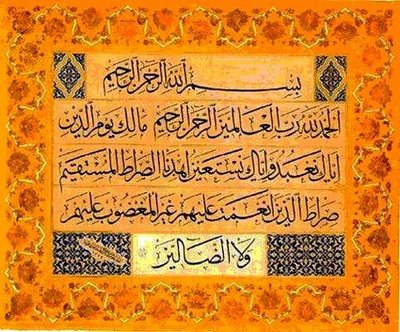
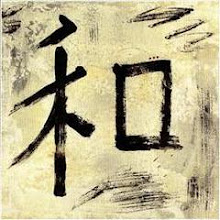
Image: From The Spirit of Islam: Experiencing Islam Through Calligraphy, an exhibition at the Museum of Anthropology, University of British Columbia.

Thursday, November 08, 2007

Clash of Civilisations


A friend sent me a link to a video clip, saying “watch this clip from Al Jazeera before its taken off the web”.

I clicked the link – and heard the discussion in Arabic, with English sub-titles. Its also available on YouTube.

This is an interview with Arab-American psychologist, Wafa Sultan, shown on Al Jazeera TV (Qatar) on 21 February 2006.


I am reproducing the transcript of the interview here.

Wafa Sultan:

The clash we are witnessing around the world, is not a clash of religions, or a clash of civilisations. It is a clash between two opposites, between two eras. It is a clash between a mentality that belongs to the Middle Ages and another mentality that belongs to the 21st century. It is a clash between civilisation and backwardness, between the civilised and the primitive, between barbarity and rationality. It is a clash between freedom and oppression, between democracy and dictatorship. It is a clash between human rights, on the one hand, and the violation of these rights, on the other hand. It is a clash between those who treat women as beasts, and those who treat them like human beings.

What we see today is not a clash of civilisations. Civilisations do not clash, but compete.

Interviewer:

I understand from your words that what is happening today is a clash between the culture of the West, and the backwardness and ignorance of the Muslims?

Wafa Sultan:

Yes, that is what I mean.

Interviewer:

Who came up with the concept of a clash of civilisations? Was it not Samuel Huntington? It was not Bin Laden. I would like to discuss this issue, if you don’t mind…

Wafa Sultan:

The Muslims are the ones who began using this expression. The Muslims are the ones who began the clash of civilisations. The Prophet of Islam said: “I was ordered to fight the people until they believe in Allah and His Messenger.” When the Muslims divided the people into Muslims and non-Muslims, and called to fight the others until they believe in what they themselves believe, they started this clash and began this war. In order to stop this war, they must re-examine their Islamic books and curricula, which are full of calls for takfir and fighting the infidels.

My colleague has said that he never offends other people’s beliefs. What civilisation on the face of this earth allows him to call other people by names they did not choose for themselves? Once he calls them Ahl Al-Dhimma, another time he calls them the “People of the Book”, and yet another time he compares them to apes and pigs, or he calls the Christians “those who incur Allah’s wrath.” Who told you they are “People of the Book”? They are the People of the Book, they are people of many books. All the useful scientific books that you have today are theirs, the fruit of their free and creative thinking. What gives you the right to call them “those who incur Allah’s Wrath”, or “those who have gone astray”, and then come here and say that your religion commands you to refrain from offending the beliefs of others?

I am not a Christian, a Muslim, or a Jew. I am a secular human being. I do not believe in the supernatural, but I respect others’ right to believe in it.

Other Participant:

Are you a heretic?

Wafa Sultan:

You can say whatever you like. I am a secular human being who does not believe in the supernatural …

Other Participant:

If you are a heretic, there is no point in rebuking you, since you have blasphemed against Islam, the Prophet, and the Koran …

Wafa Sultan:

These are personal matters that do not concern you. Brother, you can believe in stones as long as you don’t throw them at me. You are free to worship whoever you want, but other people’s beliefs are not your concern, whether they believe that the Messiah is God, son of Mary, or that Satan is God, son of Mary. Let people have their beliefs.

The Jews have come from the tragedy (of the Holocaust), and forced the world to respect them, with their knowledge, not with their terror, with their work, not their crying and yelling. Humanity owes most of the discoveries and science of the 19th and 20th centuries to Jewish scientists. 15 million people, scattered throughout the world, united and won their rights through work and knowledge. We have not seen a single Jew blow himself up in a German restaurant. We have not seen a single Jew destroy a church. We have not seen a single Jew protest by killing people. The Muslims have turned three Buddha statues into rubble. We have not seen a single Buddhist burn down a Mosque, kill a Muslim or burn down an embassy. Only the Muslims defend their beliefs by burning down churches, killing people and destroying embassies. This path will not yield any results. The Muslims must ask themselves what they can do for humankind, before they demand that humankind respect them.

...........

Ms Sultan is an impressive woman, I like her, and her spiritedness. We need lots of women like her, all over the world. I can understand her ire against regimes like the one in Saudi Arabia.

But she is grossly unfair to Muslims, by condemning them all for the actions of some who act in the name of the faith. She could also place matters in true perspective, taking religion, theology, history, politics – and geopolitics - into account. I have no doubt whatsoever that Ms Sultan is a genuine humanist. But in her interview she does not at all touch upon things like the crusades, colonial occupation, missionaries, racism, the role of the USA, the role of the state of Israel etc etc. Hence, sadly, taken out of context, she would only strengthen Islamophobic currents.

Thankfully, YouTube also carries a response to Wafa Sultan by her interview colleague.


As an Indian too, I felt she was unfair to the Indian Muslim experience. Muslims in India occupy a very special place by virtue of their large number, and co-existence with people of diverse faiths, languages and cultures. Indian Muslims themselves are made up of so many ethnicities, languages and cultures. Talking of free and creative thinking, the first half of the 20th century saw the blooming of Muslim poets, writers, artists and activists in south Asia, who were rooted in the community at large – for instance in anti-colonial struggles or revolutionary activism. Islam, leftist politics and the arts – had a very rich fusion in south Asia, of which all, Muslims and everybody else, could be justifiably proud.

Today, in India, despite the overall marginalisation of and discrimination against Muslims, there are celebrated thinkers, entrepreneurs, painters, artists, film-makers, actors, singers, musicians dancers, sportspersons, poets, writers, scientists, social scientists, activists - who are Muslims, men and women, who, while being rooted in the community at large, also usually bring to the fore something distinctive through their Muslim identity. They are all positive ambassadors of Muslims, who help non-Muslims enlarge their vision and shed their habitually embraced prejudices. I have written earlier, referring to historian and writer Mukul Kesavan's insights on pluralism in India.

And there are also Muslims who are ordinary human beings, sons, daughters, brothers and sisters, husbands and wives, mothers and fathers, grandfathers and grandmothers, girls and boys, who are all part and parcel of the plurality that is India.

Islam, like all the other great religions of the world, is part of the heritage of humanity, and Muslims are the ambassadors of this heritage, for the enlightenment and elevation of humanity at large. Muslims too are human beings, like everybody else. They also have blood running through their veins, love and sorrow in their hearts, laughter and tears in their eyes, songs, of joy and pain on their lips. So why this distinction between Muslims and the rest of the world? And why not instead a zest to know more from, to share with, and to join Muslims, in building a better future for the whole world’s children?

Tuesday, May 22, 2007

Grand orchestra of love


There are impressions of love on the face of the sun; water evaporates, rising toward those impressions, and after it has been condensed in drops high above, the drops fall joyfully onto the earth on wings of love. Then, thousands of flowers burst through with love, offering smiles to their surroundings. Dew drops on leaves glitter with love and twinkle with amusement. Sheeps and lambs bleat and skip about with love, and birds and chicks chirp with love and form choruses of love.

Each being takes part in the grand orchestra of love in the universe with its own particular symphony and tries to demonstrate, by free will or through its disposition, an aspect of the deep love that is found in existence.

M Fethullah Gülen

Wednesday, April 11, 2007

Tariq Ramadan interview

Owing to a link error with this post, I am re-posting it, deleting the earlier one.


Tariq Ramadan, president of European Muslim Network and Research Fellow, European Studies Centre and Middle East Centre, St. Anthony's College, Oxford University, was interviewed by Ian Buruma, author of Murder in Amsterdam: The Death of Theo Van Gogh and the Limits of Tolerance, and Henry R. Luce Professor of Democracy, Human Rights & Journalism at Bard College, NY, at the Salzburg Seminar Session on "Immigration and Inclusion: Rethinking National Identity", in March 2007.

Download / listen to the interview here.

JP has also written about issues of identity, socio-economics, democracy, freedom and communication here.

Thursday, April 05, 2007

On Death

The effect of death on the composite nature of man is as follows:

Man has two souls, an animal soul and a spiritual soul, which latter is of angelic nature. The seat of the animal soul is the heart, from which this soul issues like a subtle vapour and pervades all the members of the body, giving the power of sight to the eye, the power of hearing to the ear, and to every member the faculty of performing its own appropriate functions.

It may be compared to a lamp carried about within a cottage, the light of which falls upon the walls wherever it goes. The heart is the wick of this lamp, and when the supply of oil is cut off for any reason, the lamp dies. Such is the death of the animal soul.

With the spiritual or human soul, the case is different. It is indivisible, and by it man knows God. It is, so to speak, the rider of the animal soul, and when that perishes it still remains, but is like a horseman who has been dismounted, or like a hunter who has lost his weapons. That steed and those weapons were granted the human soul that by means of them it might pursue and capture the Phoenix of the love and knowledge of God.

If it has effected that capture, it is not grief but rather a relief to be able to lay those weapons aside, and to dismount from that weary steed. Therefore the Prophet said, “Death is a welcome gift of God to the believer.”

But alas for that soul which loses its steed and hunting-weapons before it has captured the prize! Its misery and regret will be indescribable.

Al-Ghazzali, The Alchemy of Happiness.


The influence of Al-Ghazzali upon both the Christian and Islamic thinkers of the Middle Ages and beyond is being more and more widely documented. Known as the Proof of Islam, Ghazzali finally won acceptance for Sufism in Islam.

Above all, Ghazzali was a Sufi, and The Alchemy of Happiness is his own abridgement, designed for the ordinary reader, of his colossal master-work, The Revival of Religious Sciences.

Tuesday, February 27, 2007

Islamic banking

Three years ago, I delivered a lecture at the Institute of Objective Studies in Calcutta, titled ‘Islamic Banking: An Economist’s Perspective’.

Very few people know what Islamic banking is or what interest-free economy means. Only some devout Muslims who try to adhere strictly to the Islamic stricture against interest follow Islamic economics. We do not find mainstream academic institutions working on this subject. However, this is something that touches everyone’s life, Muslim and non-Muslim alike. Hence there is a pressing need for wider awareness among people about what Islamic economics means.

There are three aspects of the subject that merit attention. First, a moral, ethical one, which sees interest as fundamentally unjust because the borrower bears greater risk or loss, or has less security of making a profit than the lender. The lender of money is passive, while the borrowing entrepreneur is active; yet the lender commands a return even before the enterprise yields anything.

Second is the politico-economic or social revolutionary aspect. Interest is the means to protect and perpetuate the socio-economic power of those who represent the past (owners of capital) as opposed to those who seek to become something in future. Credit is the only means through which new, creative economic activity can take place. But the emergence of new enterprises, the creation of new wealth and income, empowerment of the poor and the low income group and the realisation of social justice – are all hostage to the urge of capital-owners to secure maximal returns while bearing minimal risk. Interest breeds speculation, which is the bane of productive economic activities.

The third aspect is the faith-based one, of following scriptural prescriptions.

The vision of interest-free economy has the potential of bringing together under a common movement people of Islamic faith, people of conscience, radicals and social revolutionaries.

One could cite anti-usury thinking in the pre-Christian and early Christian era (Aristotle, Plato etc). One could also highlight the underlying conflict in the American economy and society, between the interests of those with old wealth and those with nothing but their dreams, their zeal for advancement, and their labour. The ‘populist’ movement in the USA, led by Andrew Jackson (President, 1829-37), brought this tension to the fore. The conservative policies of the 1920s and the 1980s Reagan era, with their severely negative social distribution consequences may also be seen in this light.

Islamic banking or interest-free economics means that lenders become risk-sharing business partners. Social ethics, community participation and public accountability are inherent in this vision. A brave new world is waiting to be built, but this cannot happen in isolation, undertaken by one community, in a few countries. It must be a global movement of humanity, seeking to build a just world.

The Economist had recently carried an article on Islamic finance. After summarising some of the technical difficulties involved in "mainstreaming" Islamic banking, the article concluded: "None of these challenges is insurmountable. This is an era of financial innovation where investors delight in exploring new areas of risk. Cultural barriers are there to be crossed. "

Reading this, it struck me that Islamic economics is a conception whose time has now come.

Monday, October 16, 2006

Using the poor ...

I had been thinking about the irony of a Muslim from a Muslim country being awarded the peace prize for a scheme to give loans to the poor at high rates of interest.

As a socio-economist, I am entirely in favour of the Islamic stricture against interest. I see this as socially revolutionary. In essence, this means that the lender of capital becomes a risk-taking entrepreneur, earning profits. In practice, in a poverty context, it would mean genuinely socialising the economy, through bringing capital flow into pro-poor concerns.

But something like this is yet to happen.

I know there are associations, journals, and institutes devoted to Islamic banking. Recently I learnt about such an institute in Malaysia. I would be glad to read critiques of the "microcredit revolution" from such quarters.

Regarding microcredit, I am disturbed that this has become a high interest-profit earning means for banks, and there's a rush of companies to enter this fray. This has also become a means for middle-class individuals to gain well-paying jobs in NGOs. So if there's any benefit to the poor, that has to be weighed in absolute and relative terms against the real benefits to the non-poor.

Even within the microcredit framework, the potential that exists to empower and enrich the poor, through making them the real stakeholders in the profits of the operation - is never pursued. Rather they are purely instrumental, in enabling the benefits for the non-poor. At root, there needs to be a commitment to allying unequivocally with the poor, and empowering and enriching them. When that is lacking, then a means like the microcredit scheme initiated by Grameen Bank to reach credit to the poor gets taken over for other non-poor goals.

Banks and NGOs are the ones most blessed by this award.

Nevertheless, for what its worth, despite the reality behind the media hype, this Nobel peace award in the name of poverty, the attention on Bangladesh (and consequently, I hope, on its real human development achievements relative to India, and especially the state of West Bengal, Bangladesh's neighbour) - are of some positive worth.

Thursday, September 28, 2006

28 September


For Medha Patkar


I have written from time to time about various dates which are significant for me.

Among them is today’s date, 28 September.

28 September for me connotes unremitting struggle, for justice, for the oppressed.

The link for me between this date and its meaning - lies in an event on this date, in 1989. This was a massive people’s rally in Harsud, a small town in the state of Madhya Pradesh in India, asserting the will of the people who were going to be ousted and displaced by the Narmada Valley Dams Project:

We shall drown, but we shall not move!

Much water has flown along the dammed Narmada river (the most sacred river in Hindu religious consciousness) since 28 September 1989. And that ancient town of Harsud itself went under-water, in 2004.

But for me that date, and the personal meaning derived from that immense gathering in Harsud of Indian citizen activists and toiling, marginalised people, supported by thousands of others across the country through their local solidarity actions, and the fierce resolve asserted there (and tested repeatedly thereafter) – remains alive, enough to remind me of the struggle for justice whenever I come across the numbers 28 and 9.

Thanks to my association with people like Dr MKA Siddiqui, I have learnt that this is what jihad (in Islam) means: struggle for justice for the oppressed.

An activist, a person with the disposition of working with and for the victims of injustice, struggling for justice – is a jihadi; a struggler for justice is a mujahid, and the term to describe the activism of strugglers for justice would literally translate to Harkat-ul Mujahideen.

Out of his kindly and affectionate disposition, Dr Siddiqui had once told me that I was a true jihadi. No compliment could ever be sweeter and richer!


Post-script: I just learnt, thanks to the website of the International Institute of Social History, that on 28 September 1864, the Saint Martins meeting hall in London was packed to the roof with craftsmen and workers from various countries. The proposal to establish an International Working Men's Association met with great enthusiasm. Karl Marx did not belong to the organizers and was not among the speakers, but he was a member of the presidium and he was chosen (with 54 other persons) in the Preparatory Committee to extend the IWMA. Not before long he would pull the strings of this First International.

Tuesday, September 26, 2006

Ramadan greetings!

Today, Tuesday, is the second day of Ramadan, or Ramzaan as its known here in India.

On Saturday evening, out of the blue, I got a telephone call from a man in Syria. He was travelling to Calcutta, and wanted to know the local fasting time. I was very surprised. I asked him how he had got my number, and he said he had got this through the internet. I was most puzzled! I told him I would get the details and so he could call me later. I called my colleague Amina and asked her, and later conveyed this to the person.

But I’m not a practising Muslim, nor was I born in a Muslim household. Nor am I observing the Ramadan fast, or have I ever done so. But I was glad to be of some assistance to a traveller.

Fasting between sunrise and sunset through this month – not even drinking water, or swallowing one’s spit. This is one of the five cardinal pillars of Islam, together with faith, prayer, charity and pilgrimage. Fasting, or roza as its known here, is at the very heart of a Muslim's faith, and identity. This is an awesome vision and conception, a grand teacher, a ritual par excellence, for the ascent of humanity, to all that is good and high. Bearing discomfort and hardship; self-discipline; humility; virtue; conscience; reflection; appreciation; gratitude; goodwill … these are among the qualities seared into the flesh and fibre of Muslims by the great fasting; as much as they are also filled into the belly by the great feasting, of Ramadan. It is a most auspicious month.

Ramadan is as much about feasting as its about fasting! It is the time when the thoughts of Muslims are entirely on food! It is the time when food is like ambrosia lovingly fed by compassionate Allah’s own hands to the meek, starving follower! The spirit feasts, in gratitude, on the Almighty's kind compassion.

It is a time when Muslims cannot help awakening to “good”, to listening to the voice of conscience, and to practicing piety and virtue.

In India - where the second largest number of Muslims live (after Indonesia), as a large minority among peoples of other faiths, principally Hindu, but also Sikh and Christian - the fasting month of Ramzaan is a time when non-Muslims are naturally aroused to feeling, solidarity, support, compassion, admiration and one-ness towards Muslims; as they are drawn by the feasts. So the evening iftaar, the grand meal, is the means for warmth, friendship, camaraderie, between Muslims and people of other faiths. Several non-Muslim friends of Muslims join their brethren in fasting, to express their one-ness with them.

Ramzaan is a special time for me. It is the time when I call on my Muslim friends and colleagues, when I eat delectable goodies, the time when I love to walk through the crowded, adorned lanes of Muslim neighbourhoods. Everything is a feast; for the eyes, the colourful shops full of wares to tempt families to purchase for the approaching festival of Eid: of fragrances; of smells of food that make the taste buds and the stomach do acrobatics in unbearable anticipation; of innocent, eager, cheerful faces, bright eyes …

Last year, I had posted a piece called "Ramzaan Buffet" on an internet readers’ list. This was about the magnificent culinary spread laid out in the city of Calcutta during Ramzaan, and inviting readers to contact me for a guided gourmand’s tour. I shall make such a post again now. I've acquired a digital camera since then, so I can now garnish my narrative with captivating (and fragrance-exuding) pictures.

My love and good wishes to all my Muslim brothers and sisters! May your valour and prayers in this auspicious month help to bring peace and brotherhood in the world.

Saturday, September 23, 2006

The Most Great Name

A fakir in India asked a Sufi whether he would tell him the Most Great Name: the Hundredth Name of Allah. Those who know it can perform miracles, altering the course of life and of history. None may know it until he is worthy.

The Sufi said:

'In accordance with tradition, I must first give you the test which will show your capacity. You must go to the gate of this city and remain there until nightfall, returning to me then to describe something which you will have witnessed.'

The fakir eagerly did as he was told. After nightfall he came back and gave his report to the sage in these terms:

'As instructed, I positioned myself at the city gate in a condition of alertness. The incident which most impressed me during the day concerned an old man. He wanted to enter our city with a huge load of firewood on his back.

'The gatekeeper insisted on his paying a tax on the value of his goods. The old man, being penniless, asked that he be allowed to sell his wood first. Realising that he was friendless and helpless, the gatekeper forced him to hand over his wood, which he stole for himself. The old man was driven away with cruel blows.'

The Sufi said:

'What were your feelings when you saw this?'

The fakir answered:

'I desired even more strongly to know the Most Great Name. Had I known it, the case would have been different for that unfortunate and innocent wood-cutter.'

The Sufi said:

'O man born to attain felicity! I myself learned the Hundredth Name from my own Master, after he had tested my resolution and ascertained whether I was an impulsive emotionalist or a servant of man, and after he had subjected me to experiences which would allow me to see my own thoughts and conduct.

'The Hundredth Name is for the service of all mankind, all the time. My Master was none other than the wood-cutter whom you saw today, by the city gate.


From: Thinkers of the East, by Idries Shah.

Saturday, September 16, 2006

The Prophet and the dog

There is an anecdote told of Mohammed, the prophet of Islam.

One day, a panting dog feebly approached one of his followers, who took notice of the poor animal. Seeing a puddle of muddy water, he tore a scrap off the hem of his shirt, soaked it in the water and taking the dog in his lap, he moistened its mouth.

Another person, witnessing this, went and told the Prophet that a member of the group had handled a filthy animal, "and therefore he should not be allowed back here again."

Mohammed asked, "What was he doing to the dog ?"

"I don't know, but I saw him moistening its mouth with a torn piece of cloth dipped in muddy water."

"Then," replied the Prophet, "He is a better Muslim than you, because he is kind to animals."


From: khandro

Tuesday, September 12, 2006

The Fatiha


Bismillah ar Rahman ar Rahim!

Al Hamdu lil Laahe Rabbil Aalameen
Ar Rahmaan ar Rahim
Maaliki yaum id din
Ya quanah budo
Wahiya khanastaiin
Ih dinah as siraat al mustaquiim
Siraat al lazina
An amteh ilaihiim gaiiril madhdubi
Al aiihim waladdu aaleen

Aameen!


Hear / download the Surah Al-Fatiha here (WMA)

Hear / download the Fatiha here (MP3).

The Opening

In the name of God, the Compassionate, the Merciful!

All praise belongs to God alone
Lord of all worlds,
The Compassionate, the Merciful,
Ruler of the Day of Judgement.
It is You that we worship
And to You we appeal for help.
Show us the straight way,
The way of those You have graced,
Not of those on whom is Your wrath,
Nor of those who wander astray.

Amen

Get this widget | Share | Track details

Singing the Fatiha


Among followers of the Islamic faith, any good task, any auspicious occasion, is marked by the recitation of the Fatiha. The Fatiha is considered the distilled essence of the whole Koran. When we inaugrated our office-community centre in PM Basti in early 1998, as we were amidst and working with a Muslim community, we organised a Fatiha recitation ceremony.

After the Talimi Haq School was started in 1998 in Priya Manna Basti, Howrah, the teachers began the classes every afternoon with the students standing and reciting the Surah Fatiha, or the first chapter of the Koran, whose title means “the opening”.

With the daily recitation of the Fatiha, the phonetic sounds were instilled in my mind. When I was in Jerusalem in late 1998, hearing Arabic spoken around me, I remembered the Fatiha and was eager to know what exactly this meant. When I visited my friend Prof Marwan Haddad in Nablus, he gave me a set of children’s Islamic education CDs for our Talimi Haq School.

Back in India, I began listening to one CD in particular, which taught the correct pronunciation and recitation style of several verses from the Koran. I listened to the Fatiha, again and again and again, until I knew it thoroughly and had mastered it. I also referred to the English translation and internalised the meaning of each word, so that it could be expressed in a manner that conveyed the meaning and tone of this verse.

Some years earlier, I had set to melody a traditional Hindu prayer (in Sanskrit) to Ganesa, the Lord of Obstacles. In Hindu custom, any good task, any auspicious occasion, is marked by the recitation of a prayer to Lord Ganesa. So after I had learnt the Fatiha, I sought to fit this to that same melody. I felt there was an underlying oneness in the conception, intent and meaning of the prayer to Ganesa and the Fatiha. I was soon able to render the Fatiha in this melody.

Visiting Jerusalem again in early 2003, I met another friend, Omar Youssef, an architect-planner. Omar is also an accomplished player of the oud, a Middle Eastern string instrument. So Omar and I shared our music and songs. He also took me meet his friends at the Naqleh Esheber centre in Beit Hanina. This is a well-known organization involved in social communication with youth. Naqleh Eshaber is an animated character created by them for their programmes on social and environmental themes; he is thumb-sized, but with a heart as large as the heavens!

As someone born in a Hindu family and now adhering to no particular faith, I was a bit wary about singing the Fatiha in front of practicing Muslims in the Middle East. But their response was very positive! I was overjoyed!

Before I returned home, I visited the Naqleh Esheber centre again with Omar. This time there was also a group of teen boys and girls, and I shared my Fatiha composition with them; once again, with very positive response.

Listening to Omar’s accompaniment on the oud – I got a completely new turn to my melody, and this was resonating in my head.

When I returned to Calcutta – I learnt that a close friend, Dayan, had been killed in a car crash. I was devastated. Before I had left, Dayan had helped me to record some of my songs, including the Fatiha. We were supposed to do a final version. But that was not to be.

Dayan had shared my Fatiha song with his parents (his father is Shia, mother Sunni). So when I went to visit them they asked me to sing this. After the new turn given by Omar’s oud, and now this tragic setting: my melody took a further new turn. The grief-stricken heart plaintively submits to the dictates of the Almighty.

I sang the Fatiha at Dayan’s memorial gathering.

In 2005, I sang the Fatiha for Imam Muhammad Ashafa, from Nigeria. He told me he was an examiner of students in Islamic seminaries, and said he would give me 88 out of 100 for my recitation! And after hearing me sing the Fatiha at the Talimi Haq School in February 2007, blogger Sadiq wrote: "... when you were reciting the Fatiha, I was crying. ... that's the best i have ever heard in my entire life."

Hear / download the Surah Al-Fatiha here (WMA):

Hear / download the Fatiha here (MP3).

Get this widget | Share | Track details

Thursday, August 17, 2006

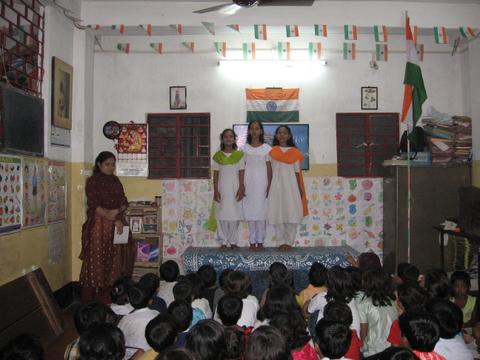
Independence Day


Yesterday, 15 August, was India’s Independence Day, a national holiday. Our Talimi Haq School in Howrah celebrated this with a flag-hoisting and a programme put up by the children and teachers. I attended that.

I was glad I went there. I was very happy to hear all the songs sung by the children, and teachers too. All were moving, rousing patriotic songs, full of meaning and messages. A small boy had learnt the Sanskrit song / prayer Vande Mataram (Hail Motherland) which he rendered perfectly. The songs were all sung very tunefully and with feeling. I was really impressed.

I felt a lot of satisfaction seeing my own dreams come true, notwithstanding years of gruelling failure. I used to sing and teach my songs when the school had been started in 1998. I felt that the beautiful India the songs were adoring was present right here in the two rooms of Talimi Haq School. The future of India depended on these children, and the songs were also exhorting them to walk well and wisely for India.

I was asked to say something in conclusion. I said anything I might want to say has already been said in the songs. 15 August is important for us because it is about freedom which came after long struggles and sacrifices by valiant people. And through that struggle something beautiful was envisioned and the seeds of that were sown– an India which is plural, secular, democratic, wise, just and compassionate. This – here, inside this room – is the India they dreamt of. And as we walk well, wisely and virtuously, so shall India.

I complimented the singers. I referred to the azaan – the call to prayer of the muezzin, from the mosque (which had interrupted our programme briefly). It had been really melodious. I mentioned Bilal, Prophet Mohammed’s companion, whom he had asked to sing the call to prayer because of his beautiful voice. Singing is the greatest skill, its what touches and moves people. So your aspiration for singing, and the effort to sing well – makes me very happy.

Finally, I explained something about the Surah Fatiha, the opening chapter of the Holy Koran, and sang it, thrice, each time in a different style, to convey the depth and range of meaning and feeling contained in this.

Hear / download the Surah Al-Fatiha here (WMA).

Hear / download the Fatiha here (MP3).

Get this widget | Share | Track details


Thus concluded Talimi Haq School’s celebration of Independence Day 2006!

Monday, July 31, 2006

Soils


I was born in a Tamil family. And I grew up and have lived all my life in Bengal.

10 years ago, on a holiday in the Nilgiri hills in south India, through a sequence of melodic encounters and experiences, one after another - I felt that the Tamils were essentially a race of bards, and had been so through centuries of history and circumstance, right through to the present day, expressing their unstoppable melodic urge in religion after religion. And I felt that blood running through my own veins. I could understand anew the lyrics of the beautiful song "Putham pudhu bhumi" that I'd been captivated by (from the Tamil film Thiruda Thiruda, set to melody by AR Rehman) :

"Want a fresh new land,
Want one meal every day,
Golden rain must shower,
And the cuckoo must sing Tamil."

Here's a video clip of that song.


A couple of years later, I made a chance visit to Bangladesh, spending two days in Dhaka. I spent some time at a seminar organised by the Department of Sanskrit & Pali at the university. I came upon the Charyagiti, the earliest extant Bangla poems, and the songs of Lalan Fakir. I learnt about the Tantrik, Buddhist and Islamic heritage of the folk of east Bengal. I felt the unique sensibility of that soil, that has endured through millenia, and which has moulded folk devotion. If one wants to see the highest kind of human being, the most refined sensibility, the most lofty, sweetest and child-like face of humanity - it is the golden soil of Bangla that produces this. The national anthem of Bangladesh begins:

My Bangla of gold, I love you!

If my Tamil blood makes me sing - it is of Bengal that I sing, and the humble Bengali Muslim peasant's rare sensibility that I venerate. I am supremely fortunate indeed, and doubly blessed, by these two precious soils.

Here's the Bengali folk songs group Dohar's song offering to the soil of Bengal.

Get this widget Share Track details

Monday, July 17, 2006

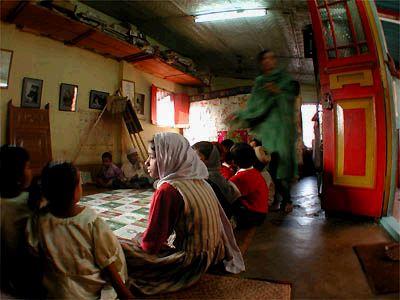
Talimi Haq School

Talimi Haq - means right to education in Urdu. But it also means learning is Truth, as being. Al-Haq is one of the names of Allah.

Started by Howrah Pilot Project on 1 June 1998, this is a non-formal learning centre for poor and working children in Priya Manna Basti, a 100 year old jute workers’ settlement on the Grand Trunk Road, in the Shibpur locality of Howrah.

Posted below is a letter I wrote to a friend in March 2005 about the school reunion.

Photo: Jean Cassagne

Sunday, July 02, 2006

"There’s no Al Jazeera in the US!"


A discussion with Prof Akeel Bilgrami

The situation is very bad for the Muslim immigrant community in the US. The worst things about 9/11 is that it has given the US govt an excuse to ratchet up what it can do in the rest of the world, in the Middle East in particular. In the US itself, it only affects poor, low-income Muslim immigrants. It doesn’t affect 99% of the US population. Academics in the US are a spoilt community, they complain about things in the US. But one should have a sense of scale on what’s going on. We should look at the Middle East. The US acts with impunity to do what it wants. Americans will not give up their basic freedoms of speech and so on. Talk about the Patriot Act and so on is a distraction, of what’s really happening, in the Middle East, and with poor Muslim immigrants.

Coming to the Palestinian cause, Arafat was a disaster. A crook, a corrupt man. For one of the most subjugated people in the world to have a corrupt man in charge for decades was really a terrible thing. He never allowed any grassroots opposition to develop. He and the leadership completely gave in to the Oslo accords, which were terrible arrangements for the Palestinians, basically putting up an apartheid regime. At the last minute, because of grassroots protests this accord was not signed. Israel does not listen to anybody and the US govt sees it as a geopolitical client. And especially now because Saudi Arabia has become a problem for the US, because people are now saying Saudi Arabia is run by a corrupt, undemocratic regime. Hence Al Jazeera is a remarkable institution. Its worth studying. I’m amazed no one has written an anthropological and sociological study of Al Jazeera. It has managed to change the map of the Middle East. It has managed to convey to ordinary people of countries like Saudi Arabia what’s been happening for so long, about which they had no idea until Al Jazeera came along. And now they know. Its turning the place upside down. Hence Israel is relied upon even more. And so they can get away with anything. The Gaza pullout was a complete smokescreen to totally consolidate what they have already.

I was invited to give a lecture at the university in Jerusalem, on the subject I write on, which is language and psychology. I said I would come if I could also speak at Ber Zeit. Edward Said, who was a close friend, arranged for me to speak at Ber Zeit. I reached Jerusalem, I spoke at the university in Jerusalem. Ber Zeit is 12 miles away. It took me 2 hrs 35 mins to reach there. We had to drive over un-driveable roads. It is a shameless brutalisation of the people and there’s nothing anybody can do about it because America will not allow anyone to do anything. America is no longer confident about its allies like Saudi Arabia.

The lies written about – for instance that there was no evacuation of Palestinians … Its amazing that for the first decade and a half after the creation of Israel, nobody talked about the Palestinians, as if they didn’t exist, blotted out of history. Even the Palestinians feel they have absolutely no public relations in the US. The Zionists have taken over everything, they’ve got the newspapers, the education system. The Palestinains have no voice. That’s because they have no way of presenting their case to the mainstream. They have never cultivated the mainstream in any respect. But you just have to do it. Because those are the people who speak to the people in power. Pamphlets do not reach the people who make the decisions. And you have be the antenna, you have to always catch what the people are saying. The Palestinians have to get an advertising agency to promote their cause! They can’t say the corporate culture is demeaning!

Terrorism is never going to go away until the problem in the Middle East gets a just solution. Osama Bin Laden said what’s absolutely correct: that the problem is this, and if you don’t pay attention to what he says is the problem, then … It doesn’t have to be him. Its not a problem of religious fanaticism. That’s a way of avoiding the reality. If you think the Indian media is bad, the media of the US is the most extraordinarily well-worked out stooge of a certain corporate culture. And I think the Left has completely failed. Soon after last elections in which Bush was re-elected, papers like the Nation said that the electorate of the “Red” states consists of vile and stupid people! Without any effort to understand how undemocratic that remark is! They blame people rather than the institutions like the media through which people are indoctrinated. Open the papers in rural Nebraska and you will see warmongering headlines. There’s no Al Jazeera in the US!

I’m very interested in why it is that the voting public votes against their own interests. Psychologists call it “the frame problem”; when you are in a certain contextual frame of rhetoric and formulation of ideas, you say one thing and when you are in a different formulation of rhetoric and politics you come up with a completely different answer. As individuals, people give responses which are very humane and compassionate. Now put it in foreign policy or political economy jargon - they will give completely inconsistent answers. There’s no reason to think they are basically inhumane people. People there are as humane as anywhere else. But they are in the framework where you have been indoctrinated from an early age by media and education, into subjugated thinking. The Left has no deep analysis of what’s going on in that country. We have become elitist, metropolitan intellectuals, with no relation to the grassroots, we have not thought deeply about the grassroots. People go to church in the so called Red belt because it’s the only place that gives them a sense of belonging or community. They have nothing else to do. No reading books, because they have not had the opportunity to get the education for that. There are no unions, no union halls, no places to meet people - except the church. You have arranged it so that there’s nothing else to do. And then you label them violent, stupid!

There is a degradation and bankruptcy of institutions at the international level. Take Brazil, where there was a progressive popular movement in which Lula emerged. An amazing thing that Brazil could have a popular movement after so much repression! You have a leader of a country who has been elected on a platform of various progressive changes. But he can’t carry out one thing of that movement, for if he did there would be capital flight, within a month, and there would be massive unemployment. Therefore it would be irresponsible of him to do what he promised his people he would do. One needs to think about the systemic nature of this. Especially now, when we no longer have just industrial capital but basically finance capital. Capital is mobile and moves in and out at will.

Somebody’s problems are not going to be solved unless they have movements, and movements not just in one country but at multiple sites. This was not the case when capital was largely industrial capital. With finance capital, we can no longer have just local movements. For then capital can just move out of a country where there is struggle. Capital has a way of buttressing itself, and keep consolidating. This has emerged only in the last one and half decades.

Thursday, June 29, 2006

Beyond the Prison of Mirrors

In April 1997, I went to Hyderabad, again to contribute towards the research study on urban poverty, which was now being initiated there. I took an afternoon flight to Hyderabad. The flight route was over the Bay of Bengal coast, which was one’s companion below for half the journey, the white line of the waves spilling out on the sand cutting across the window glass. Then the plane swings inland, westwards, and the eastern ghats come into sight. The coastline is still visible, though going further and further away from sight and becoming fainter, but nonetheless still discernable. Finally it reaches the edge of the horizon. Looking directly below one sees the high hills of the western edge of the ghats, well inland. I could see the highest point of the eastern ghats, and also the coastline, a sight one could not get even if one stood at the top of the highest peak below, for the sea was too far away. Wow! Was I thrilled! (Last year, on a morning flight from Calcutta to Delhi, in peak summer, in the distance, at the the northern horizon, the majestic Himalayas were one’s companion for a good part of the flight.)

Arriving at Hyderabad, I looked at the city below and very soon I could see the large Hussainsagar lake and my eyes searched to spot the Buddha statue in the middle of the lake, installed 5 years earlier (after having sunk to the bottom of the lake accidentally when it was taken for installation in 1988; while doing a short course on remote-sensing at the National Remote Sensing Agency in Hyderabad two years earlier, I had seen a satellite image of the formerly-sunken statue). I saw it, a white needle over the dark water! My eyes stayed with the statue as the plane descended, until a fraction of a second before touchdown, when its top flashed briefly over the city before going out of view.

I was really taken by that sight, of the gigantic Buddha statue over the lake bearing the name of the grandson of Prophet Mohammed, and spoke of this to friends during the trip. Returning to Calcutta after the visit to Hyderabad, I had with me a copy of the Dhammapada which I had found at the airport bookshop and begun reading avidly in the lounge. It was late evening when the plane reached Calcutta. I remembered my sight from the plane over Delhi six months earlier, and the reflection on stars and Mahatma Gandhi. I remembered the Great Calcutta Killing, of 16 August 1946, and wondered how my city below looked, on that night of arson.

On the taxi ride back home, I hurriedly scribbled some notes on the reverse of my boarding pass, to put down the rush of thoughts and reflections that came to mind.

But between the ascent over Delhi and the descent in Calcutta – much had happened, and all entirely unanticipated, turning me upside down, transforming my life. A veil had been pierced … the prison of mirrors had been shattered. India, freedom, independence, partition, Hindu-Muslim riots etc etc – I had become one with all this, this was now the stuff of my own life.

I rewrote what I had earlier written, adding a final line, and a title:

The Prison of Mirrors

Starlight, like remembrance, weaving constellations of tales
Floating in immensity.
The human experience, a great Milky Way.
Life and the universe, mind and material,
One mirroring the other,
In infinite rounds of resonance,
Awaiting the shattering of mere echo and image.

And I began another word-log, bringing together Delhi, Calcutta and Hyderabad. But that was only completed some months later, after I had visited Hyderabad a few more times in connection with the poverty study. And this was now a city that was dearly beloved to me. In August 1997, I attended and participated in the “Festival of the Subcontinent” in Hyderabad, organised by COVA, to commemorate the 50th anniversary of independence of Pakistan, India and Bangladesh. Of course, I saw the Hussainsagar lake and the Buddha statue several times every day, as well as the waterfront adorned with statues of Andhra Pradesh’s luminaries from various fields.

As I write this, my colleague Prodyut tells me that his cellphone was pick-pocketed a couple of days ago. I remembered being pick-pocketed during the Hyderabad Festival, Prodyut had also been there. But that did not mar my spirits, for I was truly flying high during that week in Hyderabad, I was not in this world, but in some other heaven. What a rich experience it was! I bought and heard some fantastic music albums. I even came across an important book on the Buddha in a pavement book-sale while walking along casually; reading that in turn triggered another rich wash of realisation. (My friend Achinto, the documentary photographer, was also there, and during a visit to the magnificent Golcunda fort, he photographed me as I stood over one of the high ramparts of the fort and told a tale to some school boys who were there, gesticulating with my hands and throwing my arms out over the outstretched landscape. He later said he wanted to capture me in this inspired-possessed state!)

I wrote:

Beyond the Mirror

Night.
Ascent.
Lights of the city.
Memories :
of funereal processions,
of once beloved saints,
and conflagrations, of riotous arson,
spreading hatred’s poison fire.
The stars, far away,
faint dots in the black sky.

Day.
Descent.
The needle of eternal knowledge,
poised on the still waters of the ocean of sacrifice
ringed by the pearls of devotion and service.
The light of the city dispells the noon of despair,
streets paved with jewels of wisdom,
beckoning the children,
to come,
and build tomorrow’s citadel of peace.

On 16 August 1997, Nusrat Fateh Ali Khan passed away. Since I first heard his songs a couple of years earlier, I had been set on fire as it were by his voice, which sent me into a fevered inner quest. At Hyderabad, on the evening of 17 August 1997, the Pakistani singer Reshma performed at the Festival. Before the programme began, the organisers were playing some awesome songs of Nusrat, from private studio recordings. The large gathering of people stood in silence for two minutes in homage to the great master as the programme began. As Reshma sang, and I remembered Nusrat, I looked up at the star-lit sky. There was a big full moon smiling down. For me, that was the great water-melon of voice of the music of mystical Islam.

Returning to Calcutta, I completed my account of the Delhi-Calcutta-Hyderabad experience.

Beyond the Prison of Mirrors

Night.
Ascent.
Lights of the city.
Memories:
of funereal processions
of once beloved saints,
and conflagrations, of riotous arson,
spreading hatred's poison fire.
The stars, far away,
faint dots in the black sky.

Day.
Descent.
The needle of eternal knowledge
poised on the still waters of the ocean of sacrifice,
ringed by the pearls of devotion and service.
The light of the city dispells the noon of despair.
Streets, paved with jewels of wisdom,
beckoning the children,
to come,
and build tomorrow's citadel of peace.

From great killings partitioning the soul
to joint celebrations for union of hearts:
now is the city truly lit.
The light of the city
glows
with an infinitude of starlight...
a symphony of illumination.

(Calligraphy: The name of the Prophet Muhammad, in mirror images, by Subail Anwar, Istanbul.)