
Thursday, August 31, 2006
Calcutta photoblog: they also serve ... 2
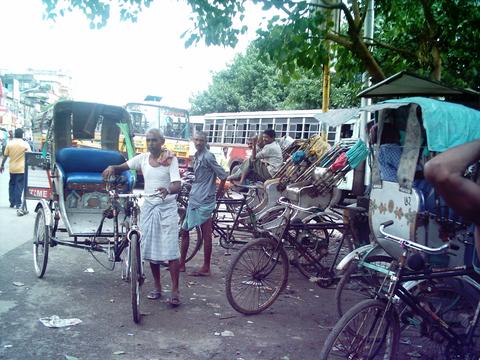
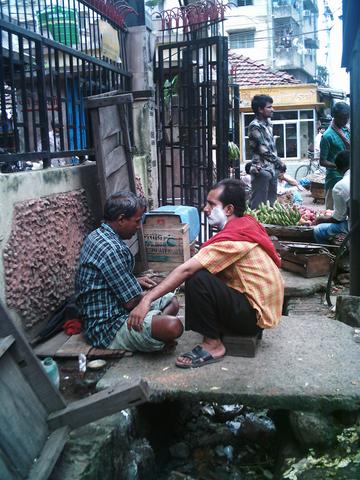
More images of people who provide important services to the citizens of Calcutta.




Wednesday, August 30, 2006
Calcutta photoblog: they also serve ...1
The theme for my next few sets of posts is “they also serve …”.
The phrase is, of course, taken from the last line of John Milton’s poem “On His Blindness”.
“They also serve who only stand and wait”.
When we live in a city, our lives are unavoidably intertwined with, and sustained by, many others. The poor and low income hold up a major part of the city system, and especially its economy. But the terms of trade that they face are highly inequitous. Nor can they think about opportunities for the future. They merely have to suffer the impact of the actions and decisions of others. This merely reflects power in society. As an economist, I know how arbitrary and dependent upon normative and social (institutional) factors pricing is. My "x-ray" vision tells me that my comfort and the discomforts of the poor are but two sides of the same coin.
I would like to invoke in this context the phrase "let us now praise famous men", which is the title of a celebrated book by the American writer James Agee and photographer Walker Evans, about tenant-farming families in Depression-era America.
The phrase is, of course, taken from the last line of John Milton’s poem “On His Blindness”.
“They also serve who only stand and wait”.
When we live in a city, our lives are unavoidably intertwined with, and sustained by, many others. The poor and low income hold up a major part of the city system, and especially its economy. But the terms of trade that they face are highly inequitous. Nor can they think about opportunities for the future. They merely have to suffer the impact of the actions and decisions of others. This merely reflects power in society. As an economist, I know how arbitrary and dependent upon normative and social (institutional) factors pricing is. My "x-ray" vision tells me that my comfort and the discomforts of the poor are but two sides of the same coin.
I would like to invoke in this context the phrase "let us now praise famous men", which is the title of a celebrated book by the American writer James Agee and photographer Walker Evans, about tenant-farming families in Depression-era America.
Achinto
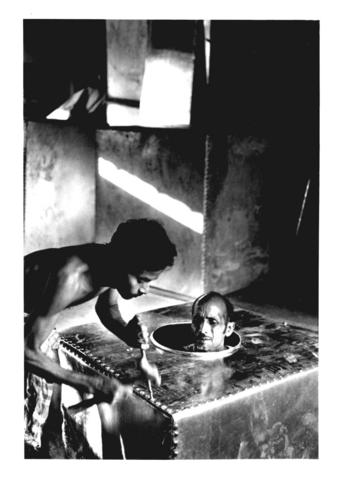
I would also like to pay tribute here to Achinto, the Calcutta-based documentary photographer. I have carried several of his pictures on this blog. He has documented people, labour, community, life,and habitat in India’s cities and villages. But it is the labouring people of Calcutta that he has worked on most extensively – reminding one of the tradition of F Engels, P Mayhew, Jacob Ris, and Walker Evans.
My long association with Achinto has been a very important element in my personal growth. His images brought to life for me something William James had written:
“…the sight of a workman doing something on the dizzy edge of a sky scaling iron construction brought me to my senses very suddenly, and now I perceived by a flash of insight that I had been steeping myself in pure ancestral blindness and looking at life with the eyes of a remote spectator. Wishing for heroism and the spectacle of human nature on the rack I had never noticed the great field of heroism lying around about me. I had failed to see it present and alive. I could only think of it as dead and embalmed, labelled and costumed, as it is in the pages of romance; and yet there it was before me in the daily lives of the labouring classes. ... There everyday of the year, somewhere, is human nature in extremis for you. And wherever a scythe, an axe, a pick or a shovel is wielded, you have it sweating and aching and with its powers of patient enduring racked to the utmost under the length of the hours of the strain.”
Photo: Achinto
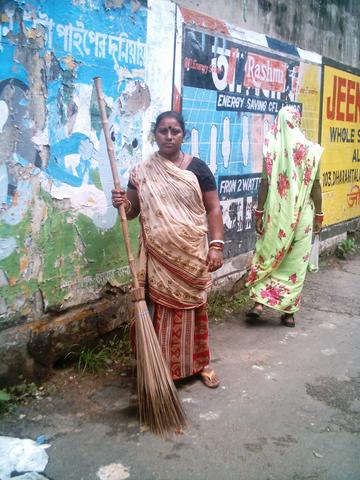

Calcutta 63
Casual manual labourer (woman), helping in road repair works.
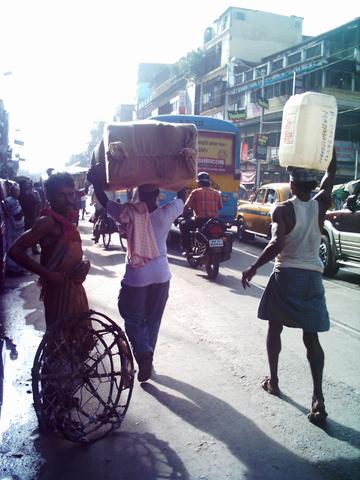
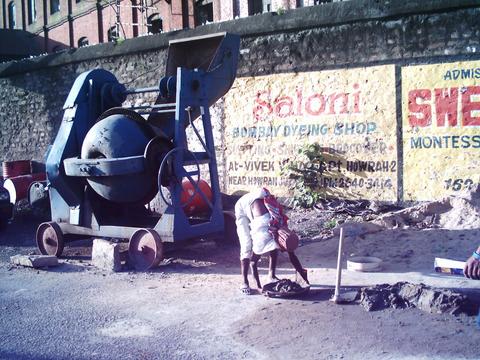
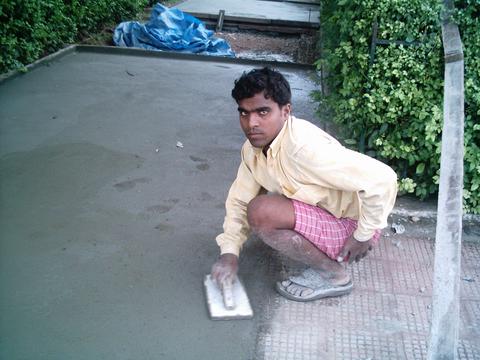
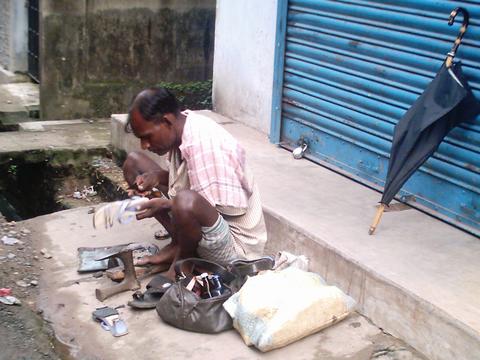
Unending, backbreaking labour, all day, every day, for a meagre daily wage - often below the legal minimum wage - is the only means for survival for hundreds of thousands of Calcutta's poor citizens and hundreds of millions of poor Indians. But at the same time, young executives from the same India receive astronomical starting salaries and handsome bonuses and increments.
Here's an account of labour in the Calcutta dockyard, around 1918, from the Memories of a Career at Sea, by Capt JFW Mitchell:
We then traded to South America and then carrying coal on the Indian Coast loading in Calcutta for Bombay, Karachi etc. I have never forgotten the sight of the labour loading coal in Kidderpore Dock, Calcutta, both men and women carrying baskets of coal on their heads up a very long heavy plank like a gangway - dumping the coal down the hatches and then back down another plank all day long and all night in the intense heat and dust. I would never have believed it if I had not seen it more than once; a pregnant woman doing this in the morning and then later the same day carrying the coal again and the new born baby strapped on her back as she was carrying. I sincerely hope conditions are not the same today.
Sadly, conditions are still hardly any different today for many Indians.
Tuesday, August 29, 2006
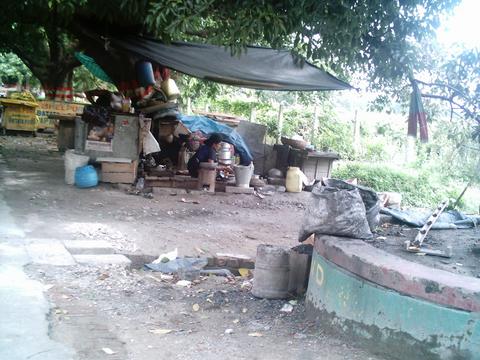
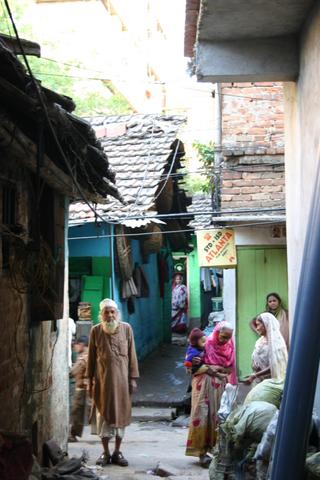
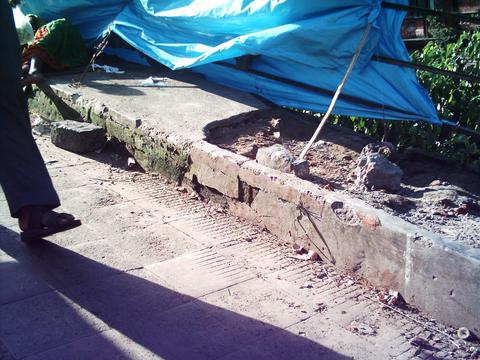
Calcutta photoblog: a place called home 2
Continuing with the theme “a place called home” …
I am grateful to Water for People for some of the images.
I am grateful to Water for People for some of the images.



Another birthday
Today is my birthday, I am 46.
The beginning of a hectic week. And this is going to be a challenging year for me, with various personal limitations to overcome, and many long deferred imperative tasks calling for serious attention.
I do not smile very much nowadays. But I do hope on my next birthday I will have something to smile about.
The beginning of a hectic week. And this is going to be a challenging year for me, with various personal limitations to overcome, and many long deferred imperative tasks calling for serious attention.
I do not smile very much nowadays. But I do hope on my next birthday I will have something to smile about.
Monday, August 28, 2006
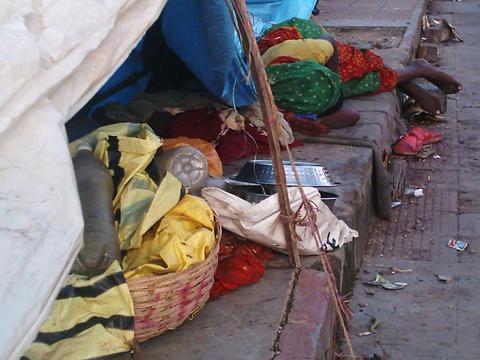
Calcutta photoblog: a place called home
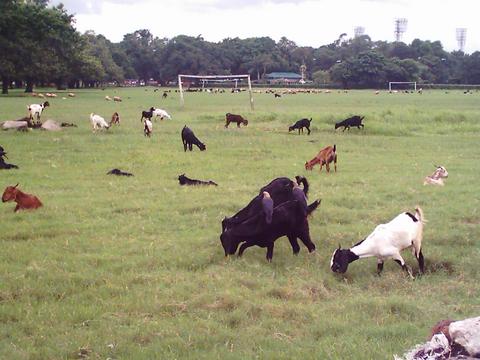
‘Goats grazing on the Maidan.’ Thus began the essay “The unintended city” by Jai Sen, written in 1976.
That phrase kept ringing in my mind as I’ve been going through the Calcutta pictures. There were several pictures of goats grazing in the Maidan (Calcutta’s large open green in the heart of the city).
In this essay, Sen argued that hidden within the commonly perceived ‘respectable’ city, of wealth, institutions, planned improvements, intellect and culture, was another city, an unintended one, of the laboring poor. This city was characterized by the survival struggles of its inhabitants. Every planned improvement for the ‘intended’ city also necessarily meant displacement and hardship for the unintended. It was the unintended who ensured that a range of services and products were available to the city; in a sense, they subsidised the quality of life of the citizens, through their own deprivation.
Sen called for a programme of empowerment of the unintended, through community-based action-planning initiatives. Such initiatives could become the basis for a holistic understanding of the city, and hence a planning intervention that sought to advocate the interests of the unintended and integrate such concerns with the formal planned developments. And thus lead to the transformation of such planned development itself, as well as of the cityscape and its social relations.
Sen started a social action group in 1977, called Unnayan to take up an ambitious, long-term programme in east Calcutta, which was just about to witness major infrastructure investments by the state government in middle-class housing, water supply, drainage, transportation and electrification. Unnnayan anticipated that the process of displacing development would again result, and sought to intervene in such a context - towards enabling a future for east Calcutta that would be more in keeping with the lives and aspirations of the marginalised laboring communities settled there.
Through Jai Sen and Unnayan, I was initiated into and apprenticed in public domain activism for the rights of Calcutta’s labouring poor. Our specific concern was housing, or a place to live, for the city’s squatter population.
In the 22 years since I first met Jai Sen – much has changed in Calcutta, and in Jai’s and my lives. But the situation experienced by the city’s labouring poor – has only worsened. Some small advances have been there – such as the acceptance by the state govt of the resettlement rights of the dwellers along the Eastern Railway rail-line near Lake Gardens in south Calcutta. Even there, the actual story is something that does not satisfy the basic guidelines for resettlement of agencies like the World Bank, Asian Development Bank etc.
But more fundamentally, life for the city’s labouring poor and low income sections has become grimmer, in terms of livelihood, housing, habitat, education, healthcare. Moreover, public activism on such matters is also hardly discernable, notwithstanding the proliferation of NGOs (and the uprising of professed concern for and solidarity with the “underprivileged”, especially by aspiring starlets, models etc). The whole physical, social and psychological landscape of the city I have lived in all my life is being rapidly transformed. The emerging new city – is something entirely alien to me. I don’t have much hope of being able to survive in that new city. And what of the millions of people whose toehold on life is even more feeble than mine?
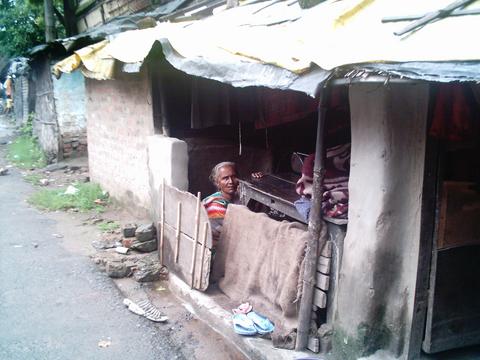
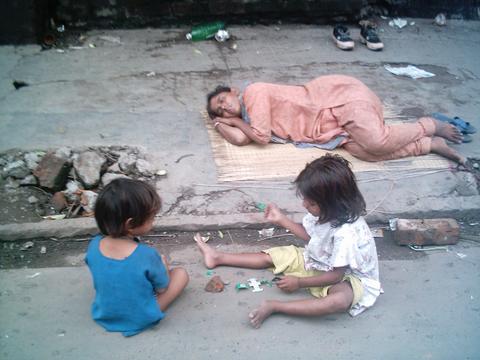
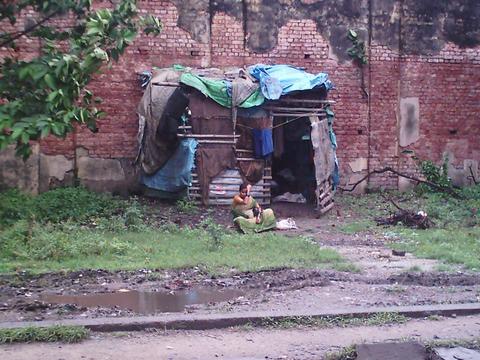
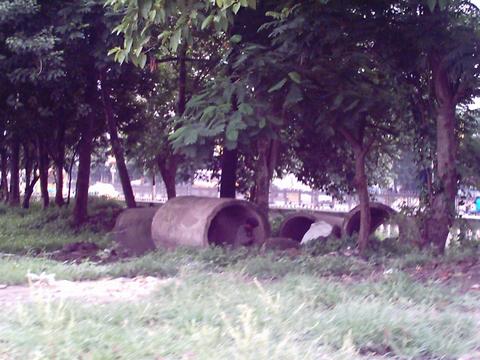
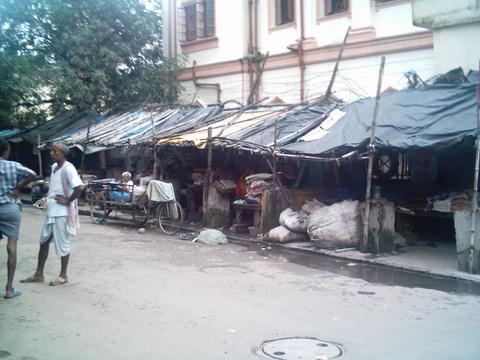
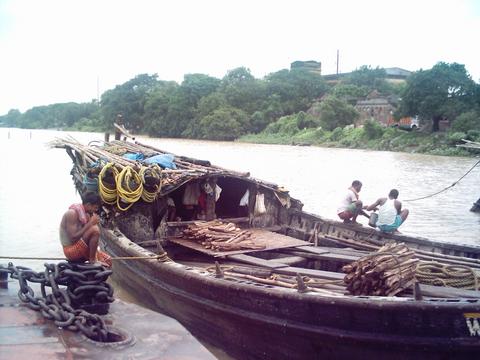
The theme for today’s images is “a place called home”.
Indian soaps
Mr IK Shukla, from USA, has sent this post about Hindi soap operas on Indian television.
Their themes, sickeningly limited and invariably decadent, portray women busy beautifying themselves, conspiring about property against family members, shopping, gossiping, actively committing crimes like murder and fraudulent seizure of properties on their own or with co-conspirators, betraying or being betrayed - a whole vista of rotten mindset and total nullity. All rich, living in well-fixed palaces, happy with diamonds, gifts, jewellery, celebrating Happy Birthday To You, and running from party to party, etc. And heavy doses of platitudes, rituals, and "old values", all resurrected and renovated and ceremoniously, expensively celebrated in the interests of a newly forged solidarity of the blood suckers and philistines. A parasitic class of degenerate carpetbaggers, all roaring rich, their talk so boringly limited to their mundane materialism as to exclude most of India, most of the real lives of hundreds of millions, most of the contemporary ordeals by fire that the Third World is undergoing, most of anything noble, large, great and good.
Their themes, sickeningly limited and invariably decadent, portray women busy beautifying themselves, conspiring about property against family members, shopping, gossiping, actively committing crimes like murder and fraudulent seizure of properties on their own or with co-conspirators, betraying or being betrayed - a whole vista of rotten mindset and total nullity. All rich, living in well-fixed palaces, happy with diamonds, gifts, jewellery, celebrating Happy Birthday To You, and running from party to party, etc. And heavy doses of platitudes, rituals, and "old values", all resurrected and renovated and ceremoniously, expensively celebrated in the interests of a newly forged solidarity of the blood suckers and philistines. A parasitic class of degenerate carpetbaggers, all roaring rich, their talk so boringly limited to their mundane materialism as to exclude most of India, most of the real lives of hundreds of millions, most of the contemporary ordeals by fire that the Third World is undergoing, most of anything noble, large, great and good.
Sunday, August 27, 2006
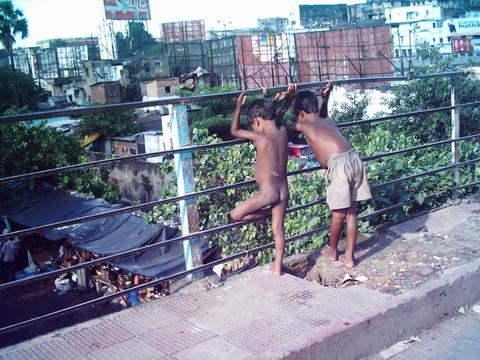
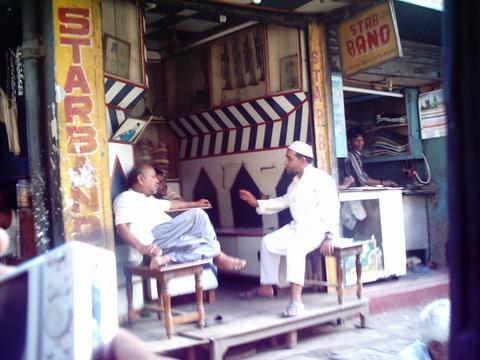
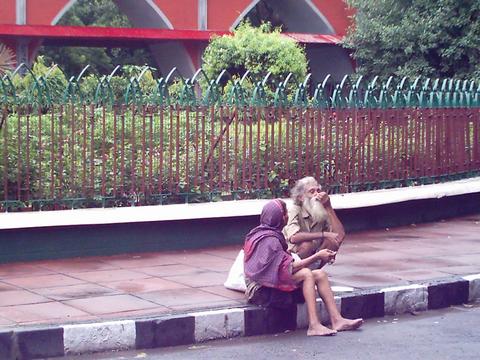
Calcutta photoblog: Scenes we’d like to see
I remember the “Scenes we’d like to see” sections in the MAD magazines (which I discovered in an uncle’s house in the late 60s). Of course that was irreverence, satire, black humour etc. (Wikipedia says: "written and illustrated by various, these were generally one-page vignettes which inverted the common conventions of moviemaking, advertising, or the culture at large, ending with a cliched character in a cliched setting, acting cowardly or saying something atypically honest.")
Going through my recently acquired Calcutta photo collection, this phrase, “Scenes we’d like to see”, came to mind looking at some of the pictures. But my usage is more innocuous, and innocent. Simply nice scenes, interesting, revealing, telling stories.
Going through my recently acquired Calcutta photo collection, this phrase, “Scenes we’d like to see”, came to mind looking at some of the pictures. But my usage is more innocuous, and innocent. Simply nice scenes, interesting, revealing, telling stories.

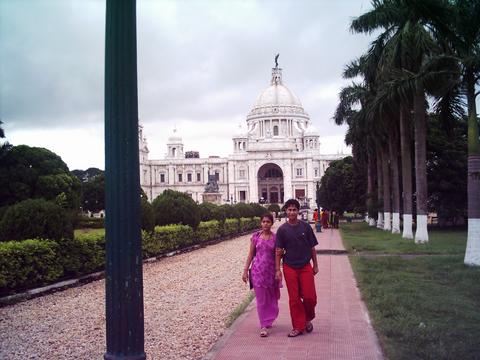
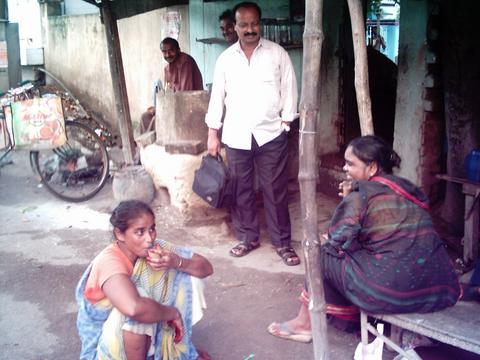
Calcutta 38
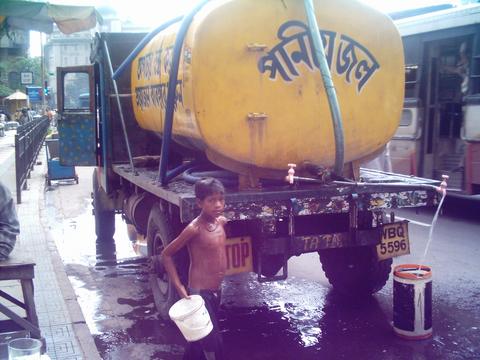
Waste not!
(Writing on the tanker: Drinking water; Stop wasting water, Use when necessary.)



Saturday, August 26, 2006
The Telegraph School Awards for Excellence

Today morning I attended The Telegraph School Awards for Excellence at Science City, Calcutta. This is an annual event (in its 10th year now) to recognise and honour students, teachers, principals and non-teaching staff at schools in West Bengal.
Scholarships endowed by people in memory of their loved ones are also awarded to bright students from needy backgrounds.
Most of all, the awards try to highlight and celebrate the exceptional courage and struggles of students, and the commitment and compassion of teachers, parents and school-builders in the state.
The chief guest this year was the West Bengal governor, Mr Gopal Krishna Gandhi (grandson of the Mahatma). Like the chief guests of earlier years (Chief Minister Mr Buddhadev Bhattacharjee, Dr Manmohan Singh, Mrs Sonia Gandhi, Mr Narayanamoorthy), Mr Gandhi said he was moved, humbled and filled with hope hearing the tales of extraordinary courage of young boys and girls who had overcome mighty challenges and hardships in their quest for learning.
A bonus was the presence of Indian cricket hero Kapil Dev, who, moved to tears, gave away the awards in the “courage” category. In a voice choked with emotion he said: "I am proud to have shared the stage with such champions and true heroes. ... Don't lie to yourself, always be true to yourself, and you will emerge a champion."
What a large-hearted man Kapil is, and that is what makes him beloved of Indians.
Calcutta photoblog: Morning 4
I conclude today the series of morning images from Calcutta.
Baird Cornell, an artist from Germany, had as part of his current project lent digital cameras to the volunteer teachers of Talimi Haq School, Howrah, to take pictures, across the river, in Calcutta. All the pictures I have been posting were taken by them.
Delighted with the results, and to enable an ongoing creative engagement, Baird has generously donated a digital camera to the Talimi Haq School.
Thank you very much Baird!
Baird Cornell, an artist from Germany, had as part of his current project lent digital cameras to the volunteer teachers of Talimi Haq School, Howrah, to take pictures, across the river, in Calcutta. All the pictures I have been posting were taken by them.
Delighted with the results, and to enable an ongoing creative engagement, Baird has generously donated a digital camera to the Talimi Haq School.
Thank you very much Baird!

Calcutta 32
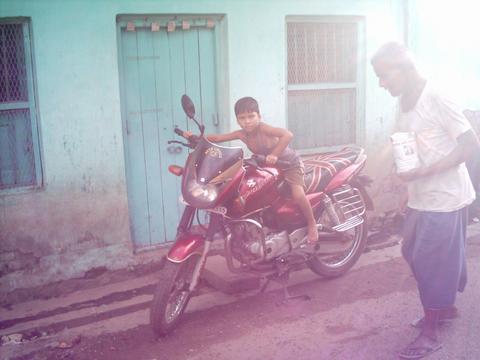
This little boy is already up, to see off his father leaving for work. The coal stoves are being lit, and smoke fills the atmosphere. Grandpa comes home with the packet of puffed rice he’s just bought for the family’s breakfast …

Calcutta 34
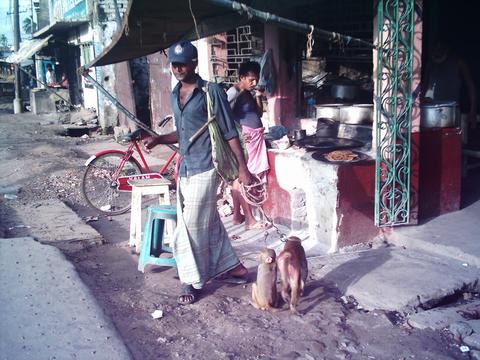
And this monkey-man sets off for another day’s work with his two work-mates, after a quick meal of kabab-paratha and sweet, milky tea at a roadside eatery, savouring the final puff of his bidi.
Friday, August 25, 2006
Happy Birthday Calcutta!
Today, 24 August, is considered Calcutta’s “foundation day”. On this day in 1690, Job Charnock of the (British) East India Company landed by boat at a riverbank in Sutanuti (in today’s north Calcutta), and decided to set up a trading post here.
What is now Calcutta was then a collection of villages of fishermen, weavers and other artisans. There were also some rich landlords and traders around. The imperial-colonial kiss-embrace made this into a teeming metropolis.
Happy Birthday Calcutta!
What is now Calcutta was then a collection of villages of fishermen, weavers and other artisans. There were also some rich landlords and traders around. The imperial-colonial kiss-embrace made this into a teeming metropolis.
Happy Birthday Calcutta!

Calcutta 27

This former worker of a closed factory, who now sells rings and amulets, sets up "shop" on the streetside ...
Calcutta 29

This man with his performing bear is already out on his rounds, trying to attract custom ...
Subscribe to:
Posts (Atom)

